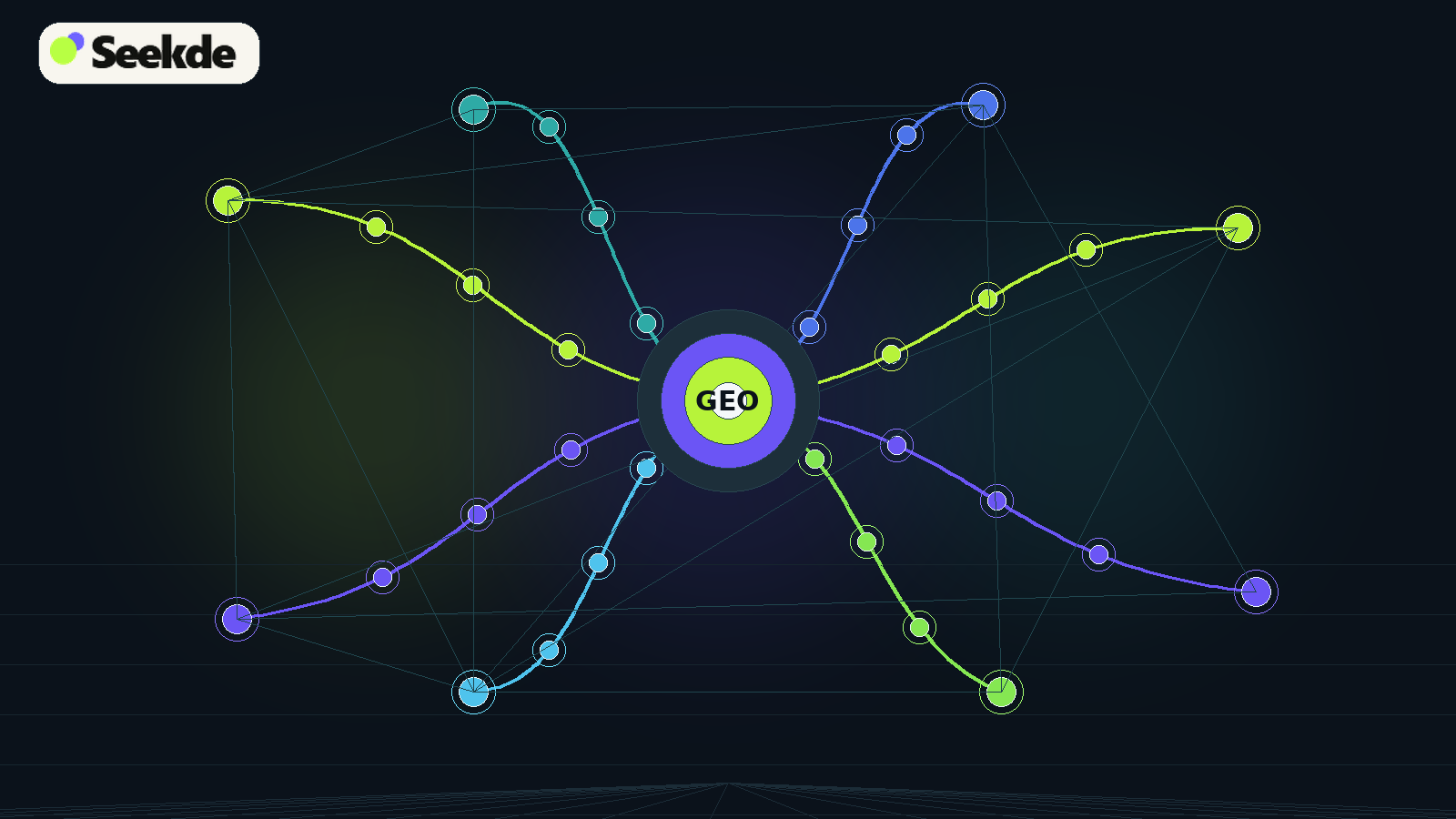
Generative engine optimization (GEO) is the practice of structuring, enriching, and verifying web content so that AI-powered answer engines can accurately retrieve, synthesize, and cite it within generated responses. While traditional search engine optimization (SEO) aims to position URLs within organic search result lists ("10 blue links"), GEO optimizes for inclusion in synthesized multi-source answers produced by systems such as Google AI Overviews, ChatGPT Search, Perplexity, and Microsoft Copilot.
GEO was introduced formally in academic literature by researchers from Princeton University, Georgia Tech, the Allen Institute for AI, and IIT Delhi in their foundational benchmark study (GEO: Generative Engine Optimization, Aggarwal et al., 2023). Evaluating content modifications across a 10,000-query benchmark corpus (GEO-BENCH), their research demonstrated that content enriched with authoritative citations, quotations from primary sources, and clear factual statistics achieved up to 40% visibility improvement within the study’s experimental setting. While academic benchmark results do not represent an operational guarantee across proprietary production search engines, they offer empirical insight into content characteristics that may aid retrieval and synthesis in benchmark environments.
In practical search operations, GEO does not replace technical SEO. Instead, it introduces a measurement and optimization layer focused on information verifiability, quotation density, and probabilistic source attribution.
The 4 Core Pillars of Generative Discoverability
To understand how an AI system selects supporting sources, consider the transition from document ranking to passage synthesis. Retrieval-augmented answer systems can retrieve and score passages or other document units rather than treating every page as a single indivisible unit; the exact retrieval granularity varies by system.
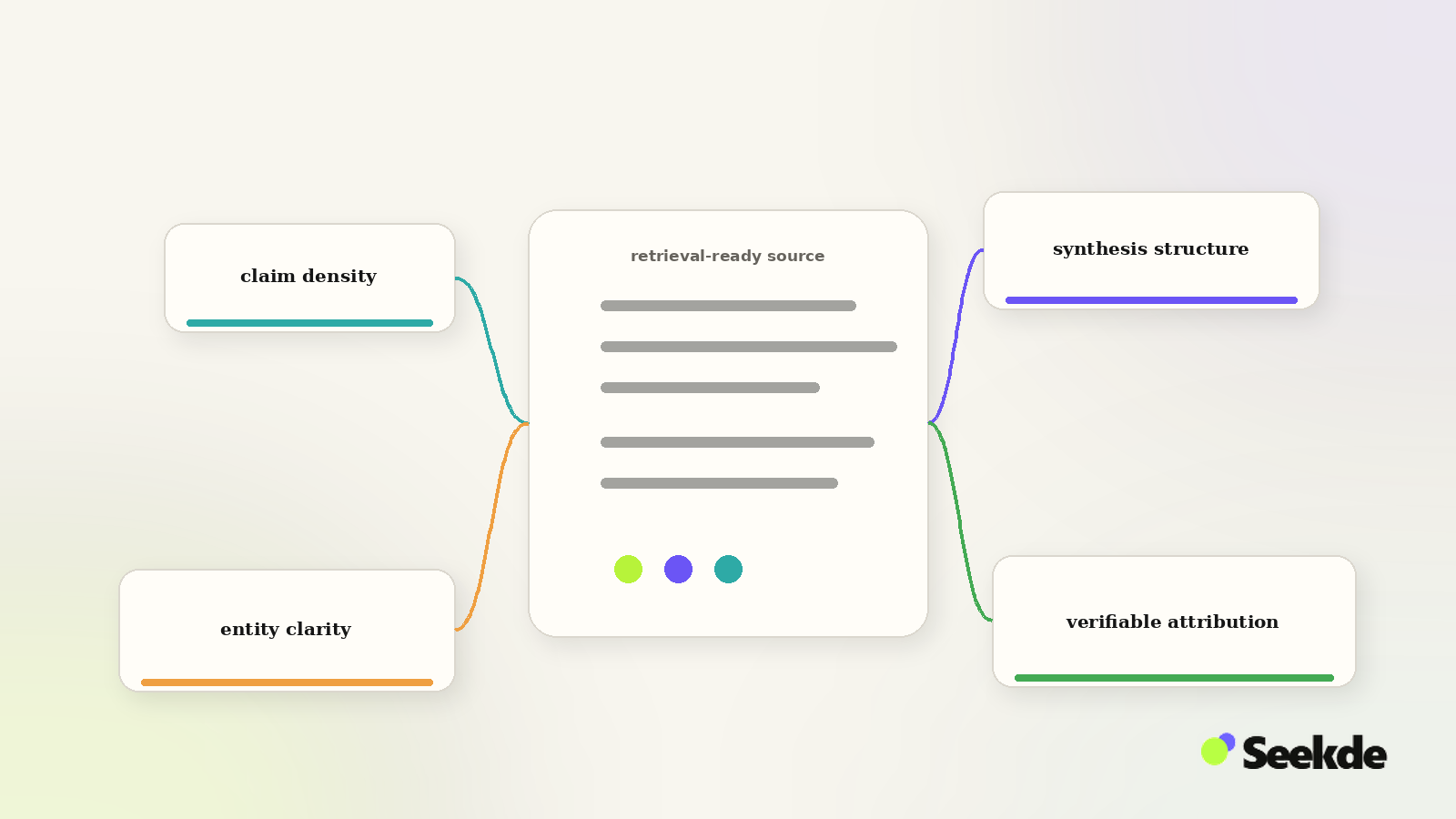
Seekde frames generative discoverability through four core editorial heuristics and frameworks:
| Pillar | Architectural & Editorial Focus |
|---|---|
| 1. Claim Density | Extractable, self-contained assertions (Seekde heuristic) |
| 2. Quotation Structure | Distinctive expert points and phrasing |
| 3. Entity Disambiguation | Explicit organization and product facts |
| 4. Verifiable Attribution | Primary sources, specs, and methodologies |
1. High Claim Density (Seekde Editorial Heuristic)
Seekde editorial guidelines prioritize high claim density—ensuring text segments contain extractable, self-contained factual assertions per paragraph. Fluffy narrative introductions, rhetorical filler, and conversational preambles dilute the semantic signal. Structuring explanations with concise, information-dense prose provides clearer inputs for automated retrieval systems and neural rerankers.
2. Quotation and Synthesis Structure (Seekde Heuristic)
When AI systems synthesize an answer from multiple sources, clearly articulated definitions, distinctive expert phrasing, and modular subheadings improve clarity for both human readers and automated retrieval systems, aiding source attribution.
3. Entity Disambiguation (Seekde Framework)
Before an answer engine can cite an organization, product, or methodology, it must resolve what that entity is. Ambiguous brand names or inconsistent product specifications across web pages create entity ambiguity across retrieval systems. Clear on-page schema, unambiguous corporate naming, and consistent descriptions across external platforms establish clear entity boundaries.
4. Verifiable Attribution (Seekde Framework)
In retrieval-augmented synthesis, pages that cite primary research, link to authoritative documentation, and present inspectable data provide clearer verification paths. Citing primary sources does not surrender authority; it establishes your page as a verifiable reference node.
How GEO Differs from Traditional SEO
The fundamental difference between SEO and GEO lies in the delivery surface and the measurement mechanism.
| Dimension | Traditional SEO | Generative Engine Optimization (GEO) |
|---|---|---|
| Primary Goal | Rank URLs in organic search result positions | Earn mentions and citations inside generated answers |
| Output Format | Title, meta snippet, and clickable hyperlink | Synthesized prose with inline attribution cards |
| Information Extraction | Index whole pages; match query keywords | Retrieve and synthesize supporting information using lexical, semantic and other ranking/retrieval methods depending on platform architecture |
| Measurement Unit | Rank position (Position 1–10) | Probabilistic citation frequency & Share of Model |
| Volatility | Subject to core algorithmic updates and re-indexing | Variable across repeated runs of identical prompts |
| Conversion Path | User clicks link directly from SERP | User reads synthesis; clicks source for validation |
In traditional SEO, success is measured by position and organic click-through rate (CTR). In GEO, success is measured by model presence: Is your brand named? Is your URL cited as evidence? Does the answer recommend your solution or cite your research when answering comparative questions?
For a detailed side-by-side breakdown of metrics and strategic budget allocation across traditional search, direct answers, and generative systems, read our comprehensive GEO vs SEO vs AEO comparison. To understand how language models process entity memory across parametric weights and external web retrieval, explore our architectural guide to What Is LLM SEO?.
Google Guidance and Technical Guardrails
A common misconception is that GEO relies on proprietary "AI formatting tricks" or hidden machine-readable code. Current Google Search Central documentation and established Google Search Essentials provide unambiguous boundaries:
- AEO and GEO Are External Terms: Google does not officially recognize "GEO" or "AEO" as standalone ranking systems. From Google’s perspective, optimizing for AI Overviews and generative AI features in search remains SEO—grounded in creating helpful, reliable, people-first content.
- Standard Search Essentials Apply: Pages must be crawlable, renderable, indexable, and eligible for standard search snippet displays to appear in Google AI Overviews.
- No Dedicated AI Markup Required: Google explicitly confirms that publishers do not need a proprietary schema vocabulary, hidden microformats, or special meta tags to qualify for generative search inclusion.
- No Special Text Files: Protocols like voluntary
llms.txtfiles are not Google ranking requirements. Standardrobots.txtdirectives govern crawler access.
Beware Cargo-Cult GEO Tactics:
Any strategy promising "guaranteed ChatGPT citations" through hidden prompt injections, keyword stuffing in white text, or mass-produced AI-generated FAQ blocks violates search quality guidelines and offers no reliable path to durable search visibility or citations.
Measuring Generative Visibility: The Probabilistic Challenge
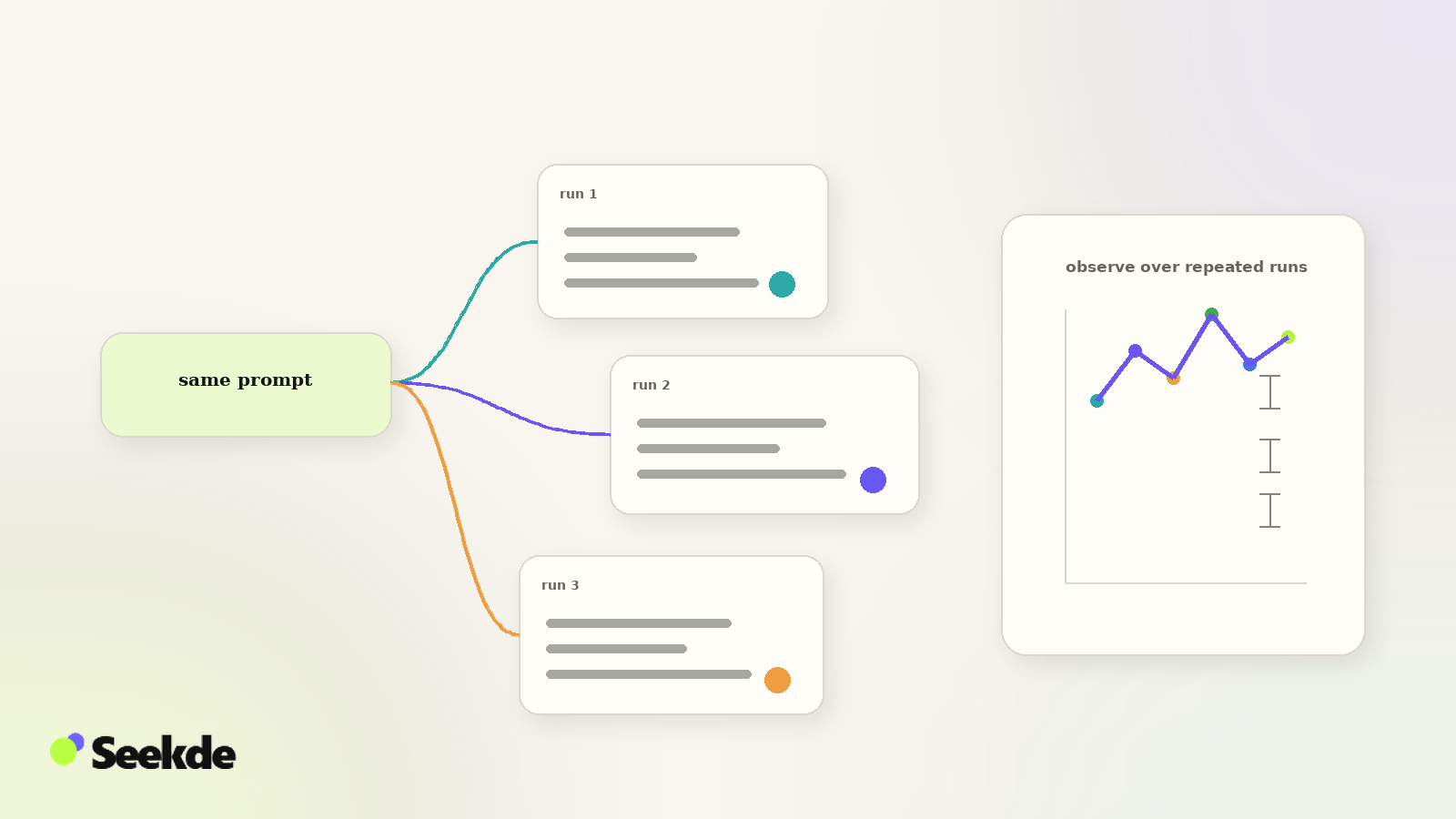
Because large language models generate text through probabilistic token prediction, responses can vary across repeated runs. If you query an answer engine five times with the exact same prompt, you may observe slight variations in wording, source selection, and citation placement.
Google Search Console Generative AI Reporting (Current 2026 State)
As of August 31, 2026, Google Search Console has rolled out a dedicated Generative AI performance report (Search) worldwide. This specialized reporting surface allows verified site owners to inspect documented impressions specifically originating from generative AI features (including AI Overviews and AI Mode), providing direct platform metrics alongside overall Search performance reporting.
Structured Empirical Observation Protocol
To complement first-party Search Console data across multi-engine ecosystems (ChatGPT Search, Perplexity, Microsoft Copilot), teams should implement a structured observation protocol:
- Group Prompts by Intent: Rather than tracking a single keyword string, evaluate a cluster of 10 to 20 representative prompts that address the same underlying user task.
- Track Citation Recurrence: Measure how frequently your domain appears across multiple query runs (e.g., cited in 7 out of 10 runs).
- Inspect Competitor Co-occurrence: Document which competing domains appear alongside your brand and whether they are cited as primary authorities or secondary alternatives.
- Separate Mentions from Clicks: Distinguish between an unlinked brand mention, an inline citation, and a referral visit.
To understand how empirical sampling controls and confidence intervals apply to AI search observation, review the Seekde research methodology and our institutional source verification guidelines.
Practical Implementation Workflow
A mature GEO program integrates directly into existing editorial and technical workflows:
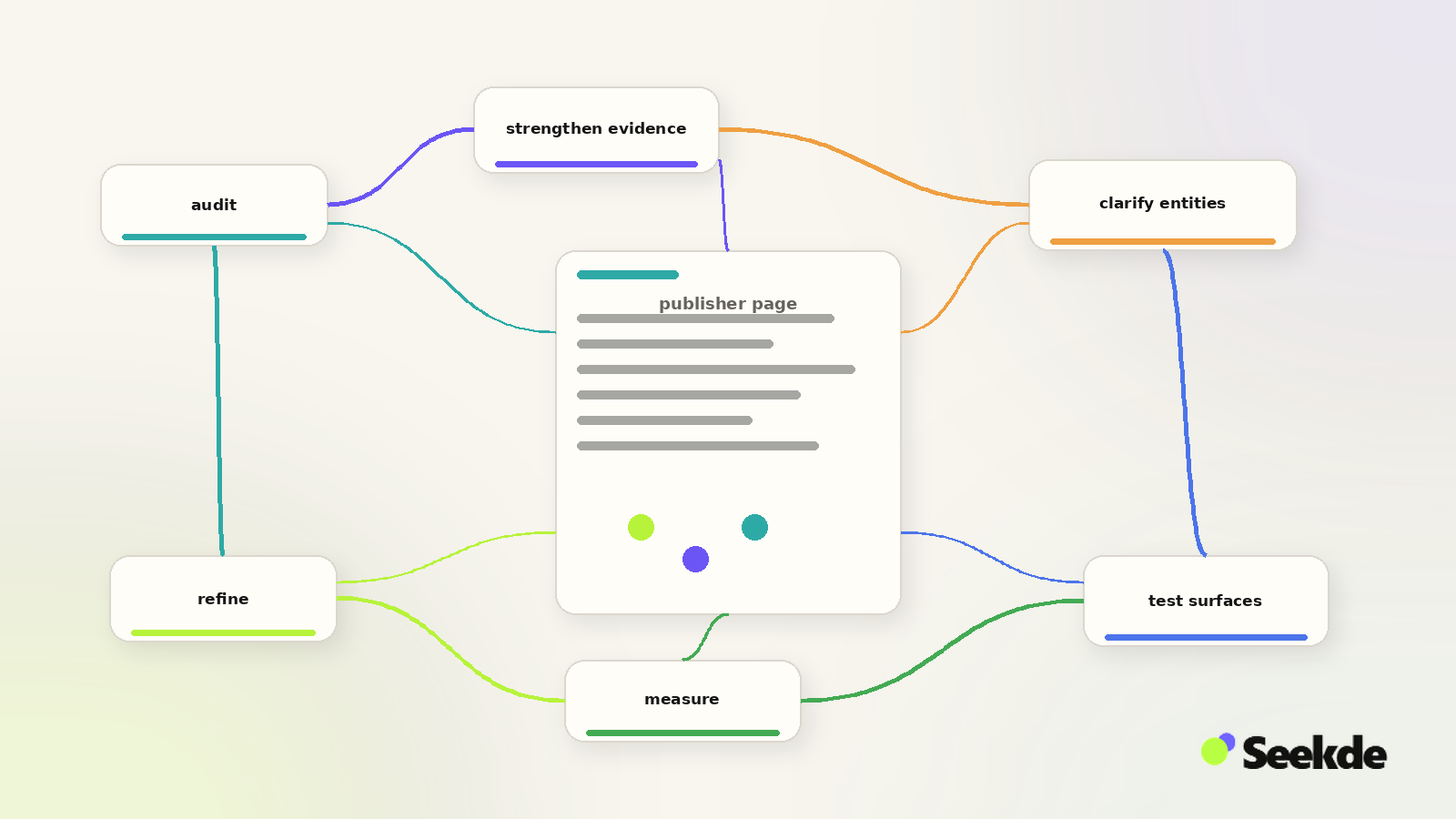
- Audit Technical Accessibility: Verify that search engine bots and AI discovery crawlers can access, render, and index your content without encountering client-side JavaScript rendering roadblocks.
- Identify Informational Entity Gaps: Review the prompt queries your prospective audience asks. Are your product capabilities, pricing parameters, and integration details clearly stated on indexable pages, or are they buried behind login walls or ambiguous marketing jargon?
- Format for Rapid Synthesis: Use descriptive
<h2>and<h3>headings that reflect real questions. Place clear, direct answers immediately beneath each heading before diving into nuance and historical context (a practice shared with Answer Engine Optimization). - Publish Primary Data and Original Analysis: Language models synthesize facts. Content that provides verified benchmarks, original survey findings, or first-party technical teardowns provides distinct factual value compared to generic summaries of existing articles.
- Understand the Retrieval Pipeline: Learn how AI search engines retrieve and cite content across candidate retrieval, passage scoring, and multi-source attribution.
Conclusion: Quality and Verifiability as the Long-Term Moat
Generative Engine Optimization is not a set of shortcuts designed to trick an LLM. It is the disciplined alignment of digital publishing with how retrieval-augmented systems discover, evaluate, and cite web documents.
By building on solid technical SEO foundations, maximizing claim density, establishing clear entity identities, and providing inspectable primary evidence, publishers improve retrieval readiness and visibility opportunities as search transitions from links to generated answers.