In-depth research and technical guides on AI search engines, vector retrieval, and ground truth synthesis.
12published guides & analyses
Seekde’s AI Search desk focuses on practical understanding rather than speculative hype. We cover systems, intent, strategic fundamentals, and the changing discovery journey.
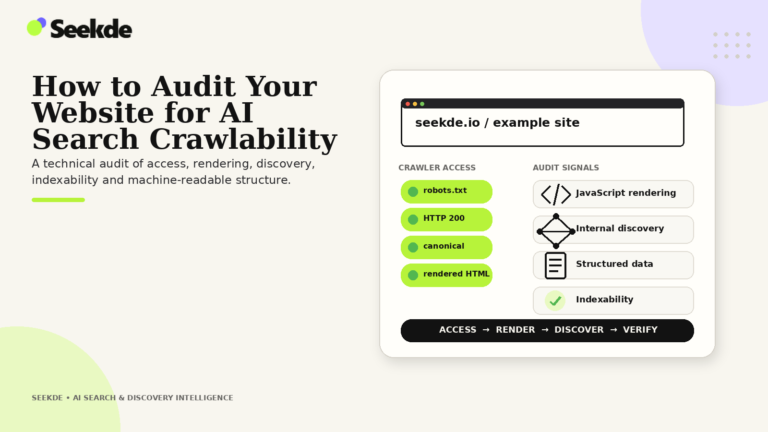
Auditing a website for AI search crawlability involves evaluating robots.txt agent directives, HTTP status codes, server latency, and server-rendered HTML completeness. Verifying that search bots can access raw page content helps confirm that candidate articles are available for real-time passage retrieval.
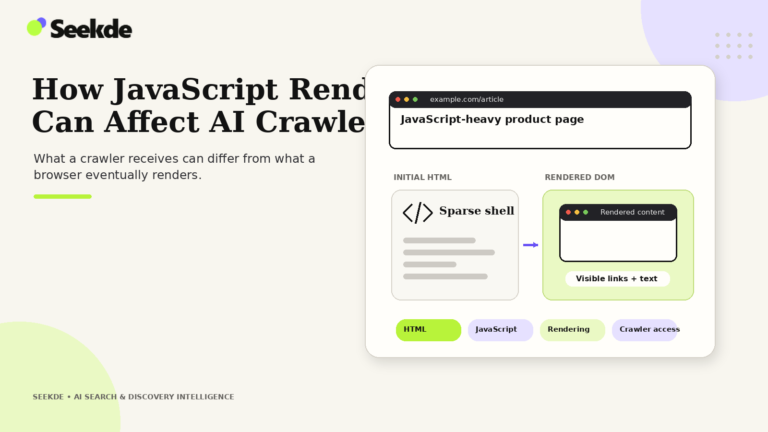
Client-side rendering can hide important content from crawlers that do not execute JavaScript reliably. Keep critical text, links and structured data available in initial HTML where practical, and test specific crawler behavior instead of assuming all AI bots render pages like Googlebot.
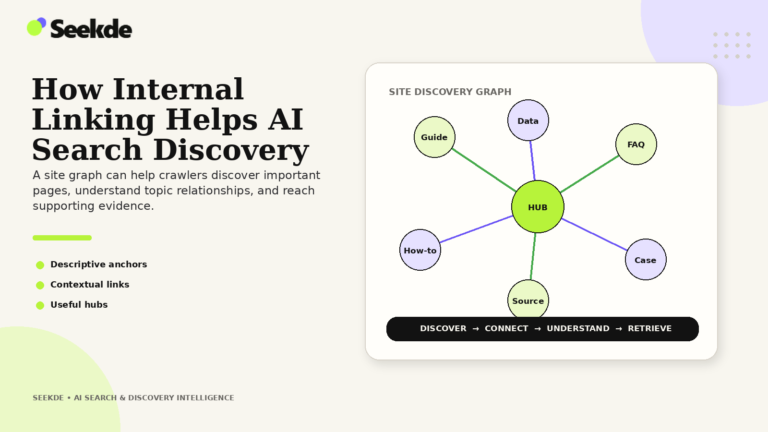
Internal links help crawlers discover related pages and make site relationships clearer to users and machines. Use descriptive anchors and shallow topic structures for discoverability, while avoiding claims that internal links are a documented direct AI-citation ranking factor.
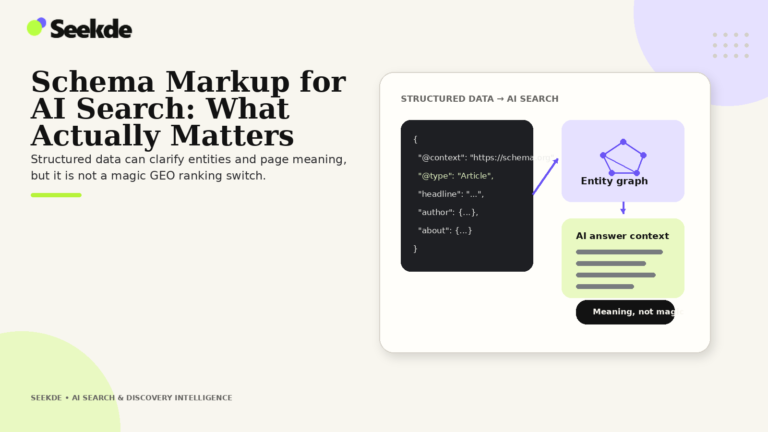
Schema markup can clarify entities and relationships for machines, but it does not guarantee AI-search rankings, citations or inclusion. Use valid structured data to describe visible page content accurately, while keeping the page's usefulness and evidence as the primary editorial concern.
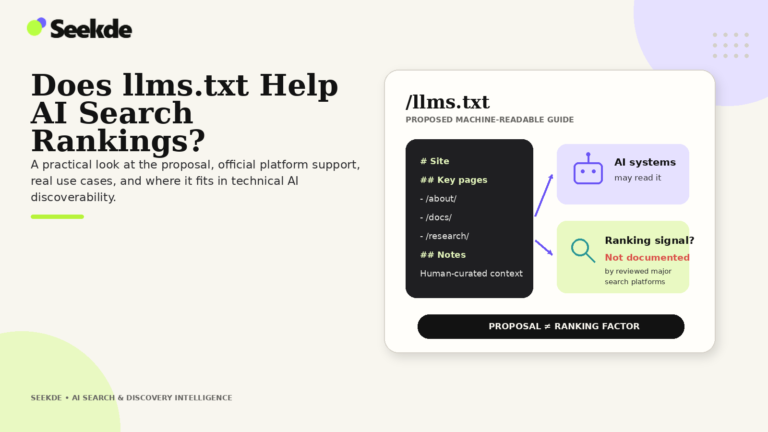
The llms.txt proposal is a community format for publishing a curated Markdown map of important site content. Major search providers do not document it as a ranking, indexing or citation requirement, so treat it as an optional documentation aid rather than an SEO dependency.
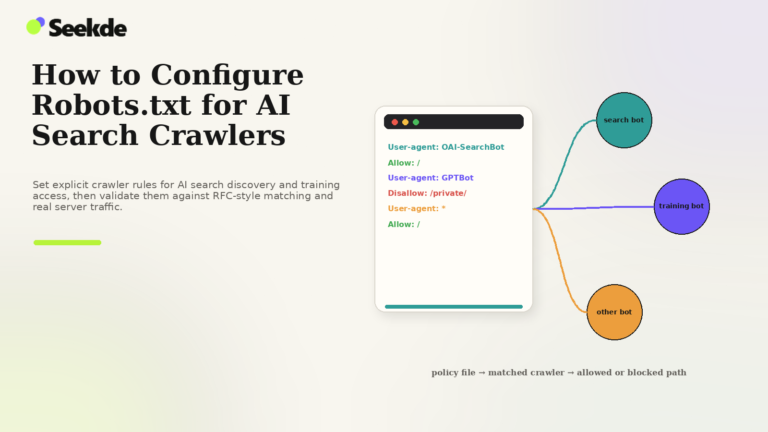
To configure robots.txt for AI search crawlers, create explicit User-agent groups for the bots you care about, allow search or retrieval crawlers that should reach public content, and block training crawlers or sensitive paths only where that matches your policy. Avoid contradictory wildcard rules, validate the file using RFC-style user-agent and path matching, and confirm real crawler access in server logs. Robots.txt controls crawling permissions; it does not guarantee indexing, retrieval, citation, or ranking.
Search Seekde
Press Esc to close · Search guides, explainers & analyses.