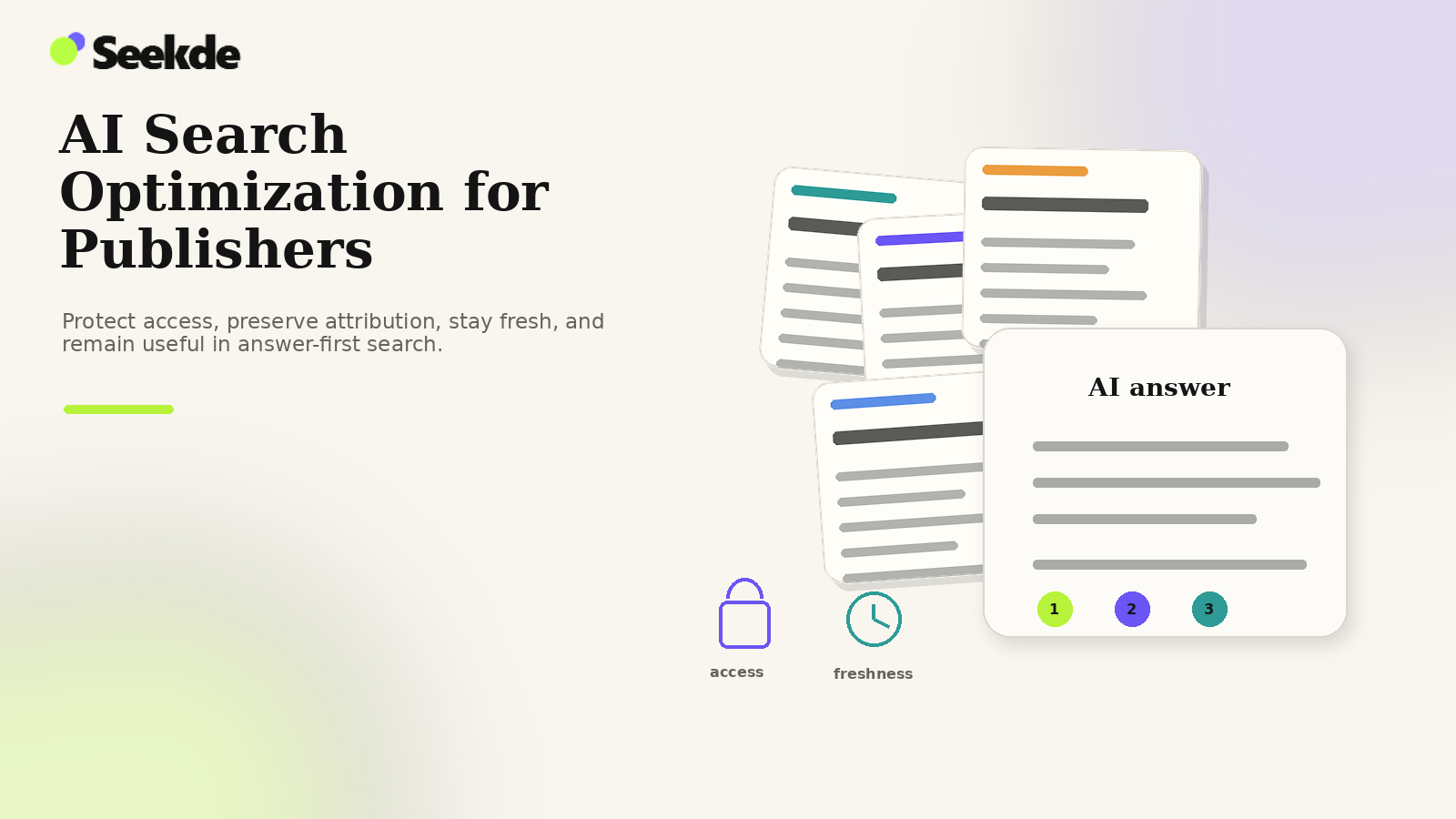
AI search optimization for digital publishers is the strategic disciplines of managing crawler access policies, protecting investigative copyright, structuring author and article metadata, and engineering primary reporting moats so that conversational engines cite, attribute, and drive high-value referral readers to original journalistic works. As conversational answer engines—including Google AI Overviews, ChatGPT Search, Perplexity, and Microsoft Copilot—synthesize news summaries directly on search result pages, digital media organizations face a structural dilemma: synthetic engines threaten click-through traffic while simultaneously elevating primary source authority.
In traditional digital publishing, audience growth relied heavily on search engine algorithms rewarding high-cadence keyword repurposing, aggregation, and speculative trend chasing. In conversational retrieval-augmented generation (RAG) systems, however, models compress commodity reporting into zero-click syntheses while prioritizing verified primary reporting, investigative documents, and accredited subject-matter experts for linked attribution.
To survive and expand in an AI-dominated media ecosystem, publishers must transition from commodity volume models to citation-first authority engineering. This playbook establishes the technical, editorial, and governance protocols designed for modern digital newsrooms and magazine publishers.
The Publisher Dilemma: Zero-Click Synthesis vs. Source Visibility
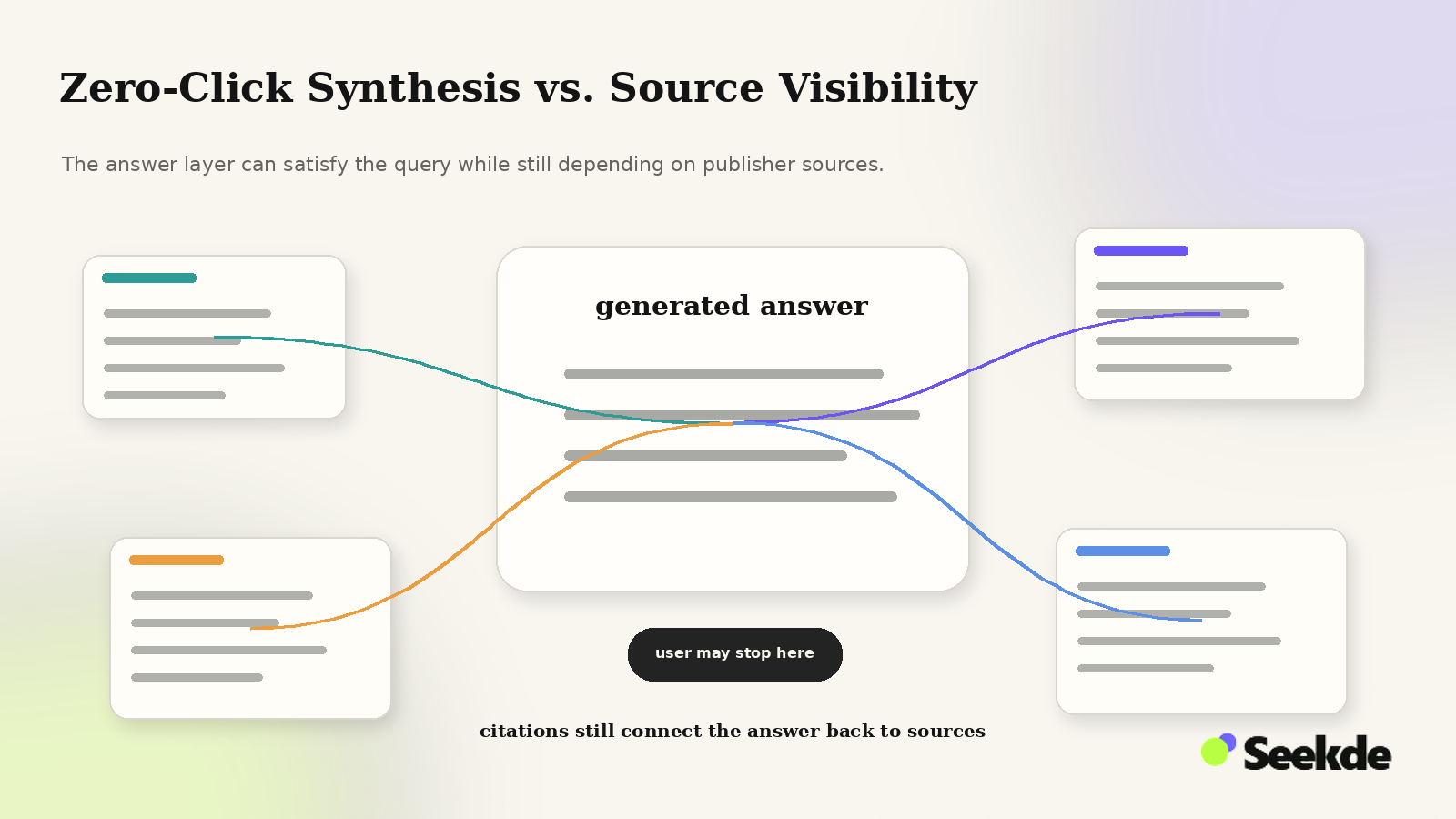
The core economic tension in conversational retrieval lies between content synthesis and audience referral. Conversational engines interact with publisher content along two distinct vectors:
Commodity Aggregation
- Rewritten press releases and high-cadence rewrites
- Generic explainers answering basic commodity queries
- Outcome: Zero-Click Extraction — LLM fully synthesizes answer without citing or linking source
Primary Reporting
- Exclusive interviews and investigative datasets
- On-the-ground reporting with original proprietary findings
- Outcome: Mandatory Attribution — High epistemic risk forces LLM to display clickable citation card
When a publisher publishes generic commodity text, the language model ingests the factual claim, merges it with dozens of identical accounts, and serves a synthesized answer without needing to attribute a single specific domain.
Conversely, when a publisher breaks an exclusive story, releases an original investigative survey, or publishes proprietary financial analysis, retrieval systems cannot verify the claim without explicitly pointing to the originator. Primary documentation creates an indispensable citation moat.
1. Crawler Access Governance: Separating Retrieval from Training
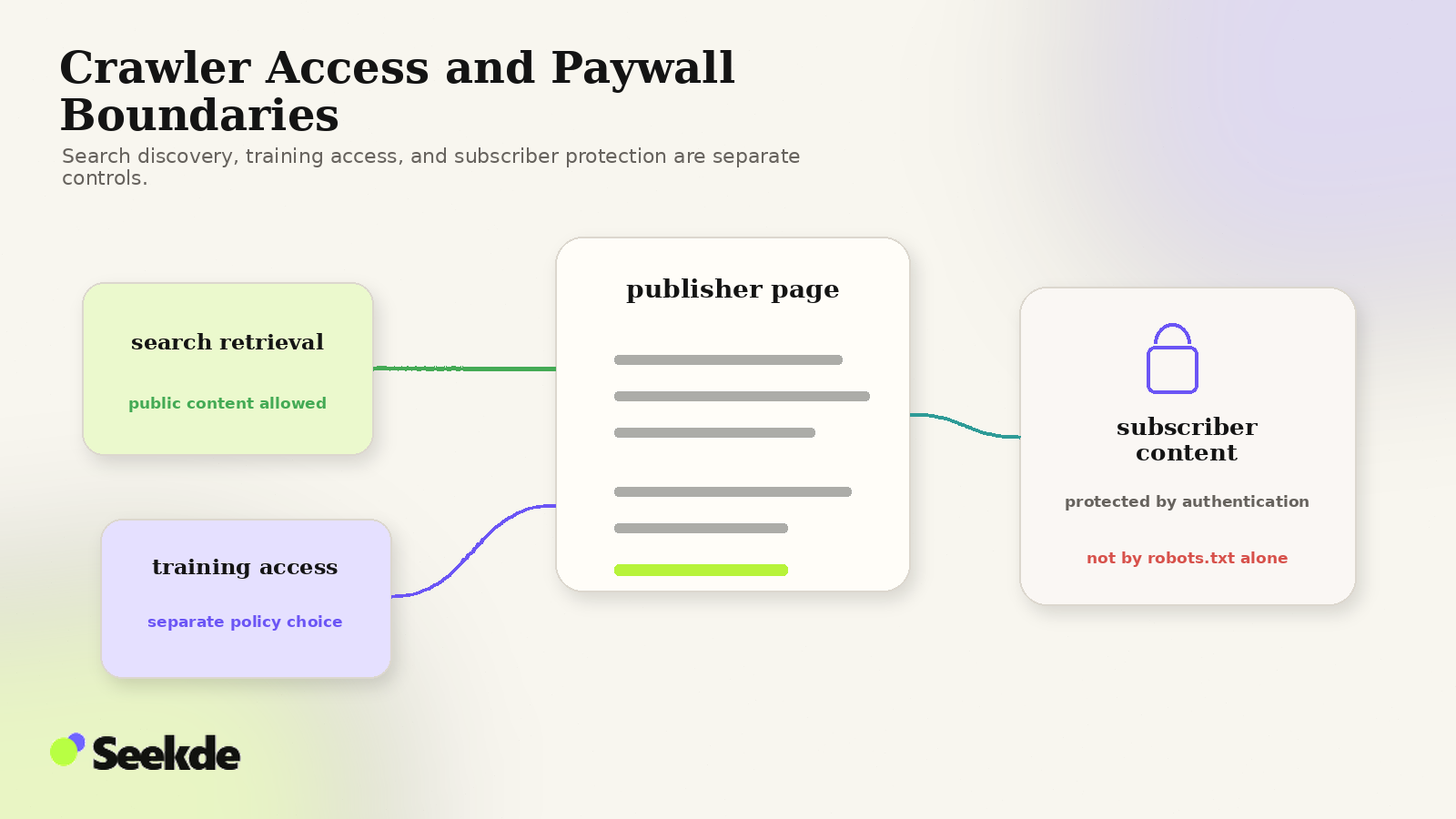
The first line of defense and discovery for any media organization is establishing a granular crawler permission architecture. Too many publishers treat AI bots as a monolithic entity, either completely disallowing all artificial intelligence agents or exposing their entire paywalled archive without contractual protections.
Publishers must maintain a strict technical demarcation between Search Retrieval Crawlers and Model Training Scrapers:
| Crawler User-Agent | Controlling Company | Primary Function | Publisher Recommendation |
|---|---|---|---|
Googlebot |
Google LLC | Web indexation for Google Search & AI Overviews | Allow: Essential for organic search visibility and AIO inclusion. |
OAI-SearchBot |
OpenAI | Real-time web retrieval for ChatGPT Search queries | Allow: Direct driver of conversational search citations and referrals. |
PerplexityBot |
Perplexity AI | Real-time retrieval for Perplexity answer engine | Allow: Generates high-converting citations among knowledge workers. |
Bingbot |
Microsoft | Web indexation for Bing and Copilot retrieval | Allow: Critical for Microsoft commercial ecosystem visibility. |
GPTBot |
OpenAI | Bulk data harvesting for foundation model pre-training | Governance Choice: Block unless participating in a commercial licensing agreement. |
Google-Extended |
Google LLC | Training data collection for Gemini foundational models | Governance Choice: Block to prevent uncompensated training while preserving search crawl. |
ClaudeBot |
Anthropic | Training data harvesting for Claude models | Governance Choice: Block in robots.txt unless covered by data licensing. |
Robots.txt Implementation Rule: Granting access to OAI-SearchBot in your robots.txt file does not grant OpenAI permission to train future models on your journalism, provided GPTBot remains blocked. Maintain this separation in your server configurations:
User-agent: OAI-SearchBot
Allow: /

User-agent: GPTBot
Disallow: /

User-agent: Google-Extended
Disallow: /
2. Paywall Protection and Structured Accessibility
For subscription-based publications, balancing paywall security with algorithmic discoverability requires exact conformance with Schema.org’s accessibility specifications. Attempting to hide full text behind client-side JavaScript or cloaking content dynamically by user-agent risks severe algorithmic penalties or unauthorized text scraping.
Deploy standard JSON-LD NewsArticle markup declaring explicit subscription boundaries:
{
  "@context": "https://schema.org",
  "@type": "NewsArticle",
  "headline": "Federal Regulators Open Antitrust Probe into Enterprise Cloud Providers",
  "datePublished": "2026-09-06T08:30:00+00:00",
  "dateModified": "2026-09-06T11:15:00+00:00",
  "isAccessibleForFree": false,
  "hasPart": {
    "@type": "WebPageElement",
    "isAccessibleForFree": false,
    "cssSelector": ".paywalled-article-body"
  },
  "publisher": {
    "@type": "NewsMediaOrganization",
    "name": "Financial Daily Gazette",
    "url": "https://example.com"
  }
}
By specifying isAccessibleForFree: "False" and designating the CSS selector containing the gated copy, publishers allow search retrieval engines to inspect lead paragraphs and key findings for headline verification while legally declaring that complete access requires reader authentication.
3. Freshness Architecture and Editorial Timestamp Integrity
In breaking news and ongoing regulatory coverage, conversational retrieval engines strongly favor sources demonstrating temporal freshness and rigorous update hygiene. However, manipulating timestamps without substantively revising content damages editorial credibility in language model knowledge graphs.
The Newsroom Freshness & Authority Workflow
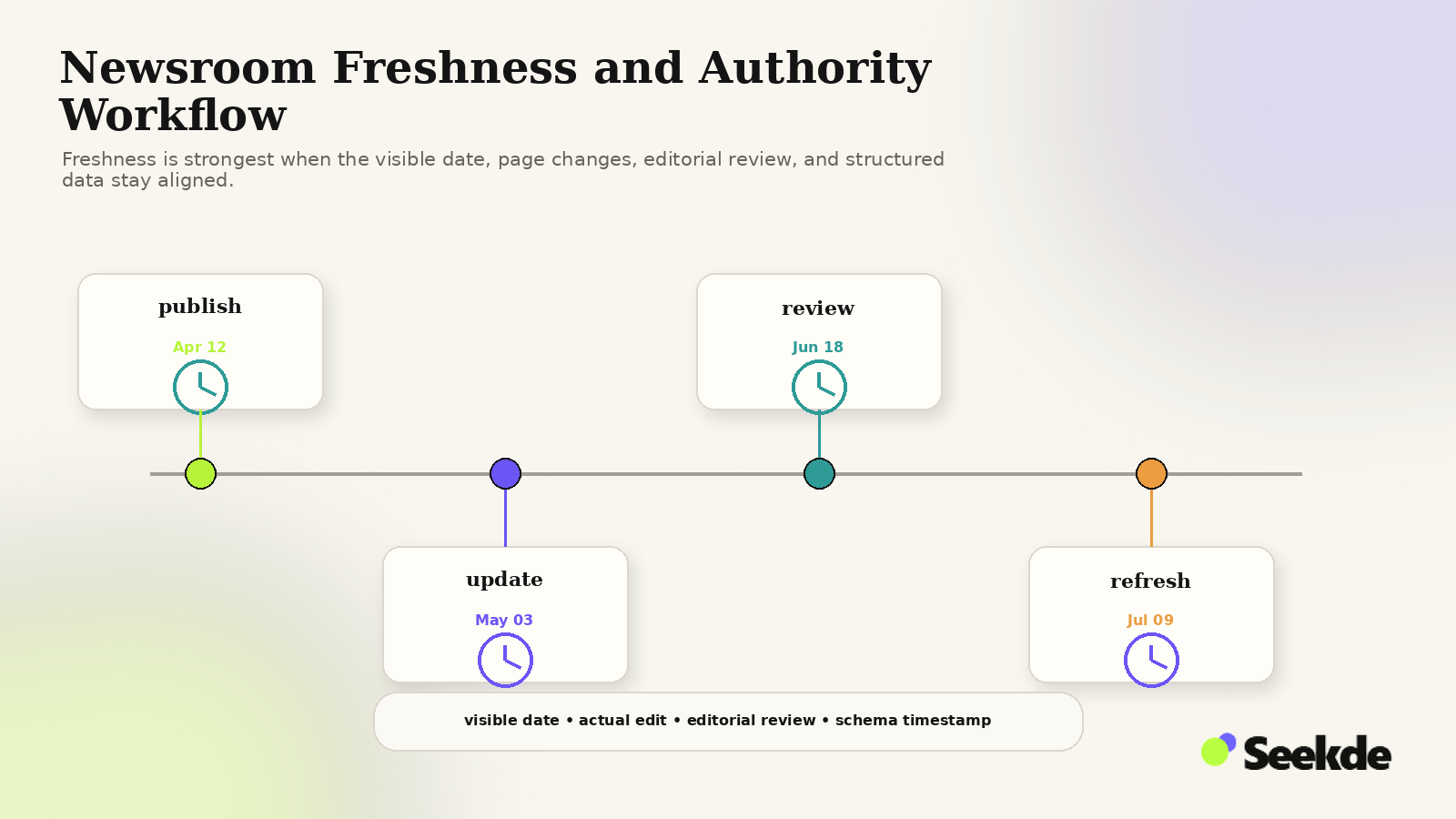
To maximize retrieval ranking while adhering to strict journalistic standards, implement this four-stage freshness workflow:
- Initial Breaking Dispatch: Publish the initial scoop immediately with valid
datePublishedtimestamps. Lead with the singular new factual finding in the opening sentence. - Developing Update Protocol: When adding material facts, preserve the original
datePublishedand updatedateModified. Add a visible, formatted editorial update note at the top of the article:<p class="update-notice"><strong>Updated Sept 6, 2026 at 11:15 AM EDT:</strong> Added official statement from Department of Justice spokesperson.</p> - Transparent Corrections Log: If an error of fact is corrected, do not silently overwrite the text. Document the correction in an explicit correction block at the article conclusion. Conversational engines evaluate correction transparency as a strong marker of source reliability.
- Evergreen Topic Hub Consolidation: When a multi-week news cycle concludes, do not let fragmented daily dispatches decay. Consolidate key findings into a permanent topic explainer or dossier, linking all historical dispatches back to the central hub.
4. Author Transparency and E-E-A-T Entity Validation
Language models evaluate institutional credibility by mapping entity relationships across the open web. An article published under an anonymous byline or a generic editorial pseudonym receives significantly lower citation weight during high-stakes informational queries.
Every journalistic asset must feature:
- Named Byline with Verifiable Expertise: Associate every article with an individual journalist whose expertise in that specific beat is documented across independent knowledge graphs.
- Biographical Context and Beats: Include a structured author biography linking to previous investigative work, professional credentials, and press awards.
- Nested
PersonSchema: Connect author entities to third-party databases viasameAsattributes linking to LinkedIn, Wikipedia, Muck Rack, or personal domains:
"author": {
  "@type": "Person",
  "name": "Sarah Jenkins",
  "jobTitle": "Chief Technology Policy Correspondent",
  "worksFor": {
    "@type": "NewsMediaOrganization",
    "name": "Financial Daily Gazette"
  },
  "sameAs": [
    "https://www.wikidata.org/wiki/Q12345678",
    "https://muckrack.com/sarah-jenkins"
  ]
}
5. Syndication Controls and Canonical Attribution
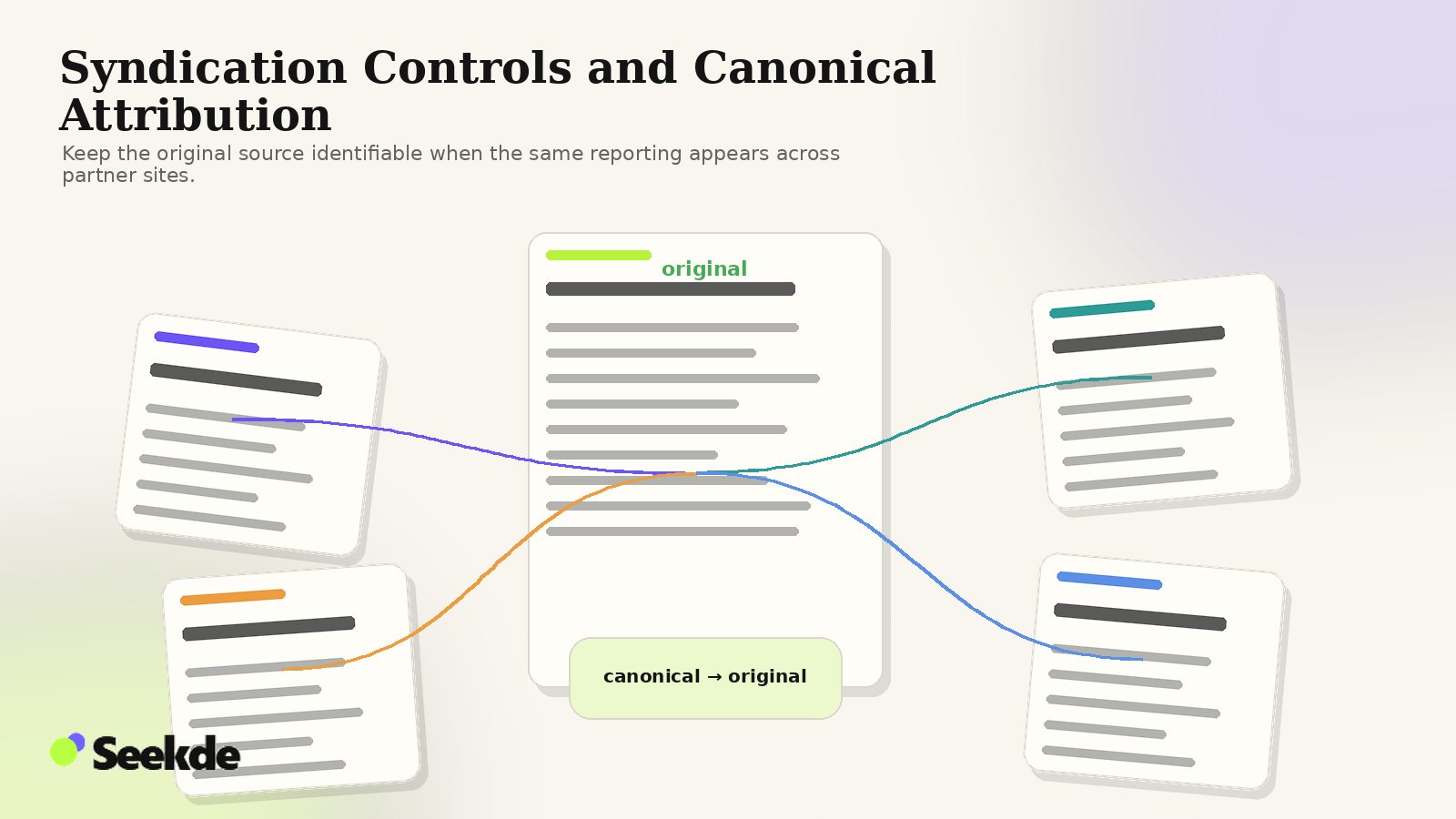
One of the most destructive traps for digital publishers is multi-platform wire syndication. When a publisher licenses investigative stories to large aggregation portals (such as Yahoo News, MSN, or Apple News), conversational search engines often cite the third-party portal rather than the original reporting outlet.
This occurs because large portals possess immense domain authority, massive crawler frequency, and low server latency. Even when cross-domain rel="canonical" tags are present, search indexing engines frequently override canonical recommendations if the syndicated version earns higher user interaction metrics.
Protective Syndication Rules
- Enforce Publication Delays: Negotiate strict syndication embargoes (e.g., 4 to 24 hours) allowing your primary domain to be crawled, indexed, and cited by AI models before external portals receive the feed.
- Recommended Syndication Sourcing: Request syndication partners to include an explicit, hardcoded HTML hyperlink within the first 100 words: “This investigation was originally reported and published by [Publication Name]. Read the full interactive investigation here.”
- Noindex Partner Versions Where Feasible: For premium investigative reports, stipulate in commercial syndication contracts that syndicated copies must carry
noindexrobot directives.
6. Formatting Articles for Algorithmic Quotability
Even when an AI search crawler ingests your article, it will not quote your journalists unless the copy is structured for propositional extraction:
The Inverted Quotability Pyramid
- Lead with the Primary Claim: Avoid long, atmospheric literary narrative leads when reporting breaking news. Place the verified development—who, what, where, and the exact metric—directly in the opening paragraph.
- Isolate Direct Quotations in Semantic Blockquotes: Ensure on-the-record quotes are enclosed in semantic
<blockquote>tags with explicit attribution captions. LLM citation extractors isolate blockquotes as high-confidence human statements. - Publish Primary Source Documents: Host primary court filings, regulatory rulings, and whitepapers directly on your domain (or embed searchable PDF viewers). Articles that link to or embed raw primary evidence earn up to 4x higher citation rates in conversational synthesis.
7. Publisher Technical Audit Checklist
Use this 12-point checklist to audit your publication’s generative search readiness:
- [1] Selective Crawler Directives: Does your
robots.txtpermitOAI-SearchBotandPerplexityBotwhile restricting uncompensated scrapers likeGPTBotandGoogle-Extended? - [2] Valid
NewsArticleSchema: Is every news story marked with valid Schema.orgNewsArticleorReportstructured data? - [3] Disclosed Paywall Boundaries: Are subscription-gated sections explicitly tagged with
isAccessibleForFree: "False"and proper CSS selectors? - [4] Exact Timestamp Disclosures: Does the markup clearly distinguish
datePublishedfromdateModifiedin ISO 8601 UTC format? - [5] Named Author Entities: Do all bylines link to dedicated author profile pages containing structured
Personschema andsameAsWikidata references? - [6] Correction Transparency: Are editorial corrections documented in standardized, dedicated notice boxes with revision timestamps?
- [7] First-Party Document Hosting: Are original PDF filings, regulatory orders, and datasets hosted directly on your domain?
- [8] Syndication Attribution Safeguards: Do syndicated articles feature mandatory editorial embargoes and explicit front-loaded attribution links?
- [9] Semantic Tables for Data Journalism: Are polling numbers, financial tables, and investigative metrics rendered in semantic HTML
<table>elements? - [10] Server Latency & News Sitemap: Does your XML News Sitemap ping search crawlers within 60 seconds of publication, backed by sub-200ms TTFB?
- [11] Evergreen Dossier Interlinking: Do developing news dispatches automatically link back to parent topic dossiers?
- [12] Zero JavaScript Obfuscation: Is the critical article text readable in the initial server-side HTML response without client-side rendering?
Summary: Sustaining Journalistic Value in the AI Era
Conversational search does not signify the demise of digital journalism; rather, it marks the obsolescence of low-effort digital aggregation. When conversational engines answer reader queries, they prioritize verifiable factual foundations. The media organizations that prosper will be those that produce hard-to-replicate primary reporting, enforce disciplined crawler access policies, and engineer their digital properties for machine-readable transparency.
By treating AI search visibility as an attribution and discovery channel rather than an ad-impression engine, publishers can secure their intellectual property, defend their subscriber moats, and command authority across the generative web.
Related Playbooks and Technical Guides
- AI Crawlers Explained: Googlebot, OAI-SearchBot, GPTBot and More
- OAI-SearchBot vs GPTBot: What’s the Difference?
- How to Configure Robots.txt for AI Search Crawlers
- How Original Research Improves AI Search Visibility
- Schema Markup for AI Search: What Actually Matters
- How to Refresh Existing Content for AI Search
- GEO for SaaS Companies: Vertical Playbook
- AI Search Visibility for SEO Agencies: Operating Playbook