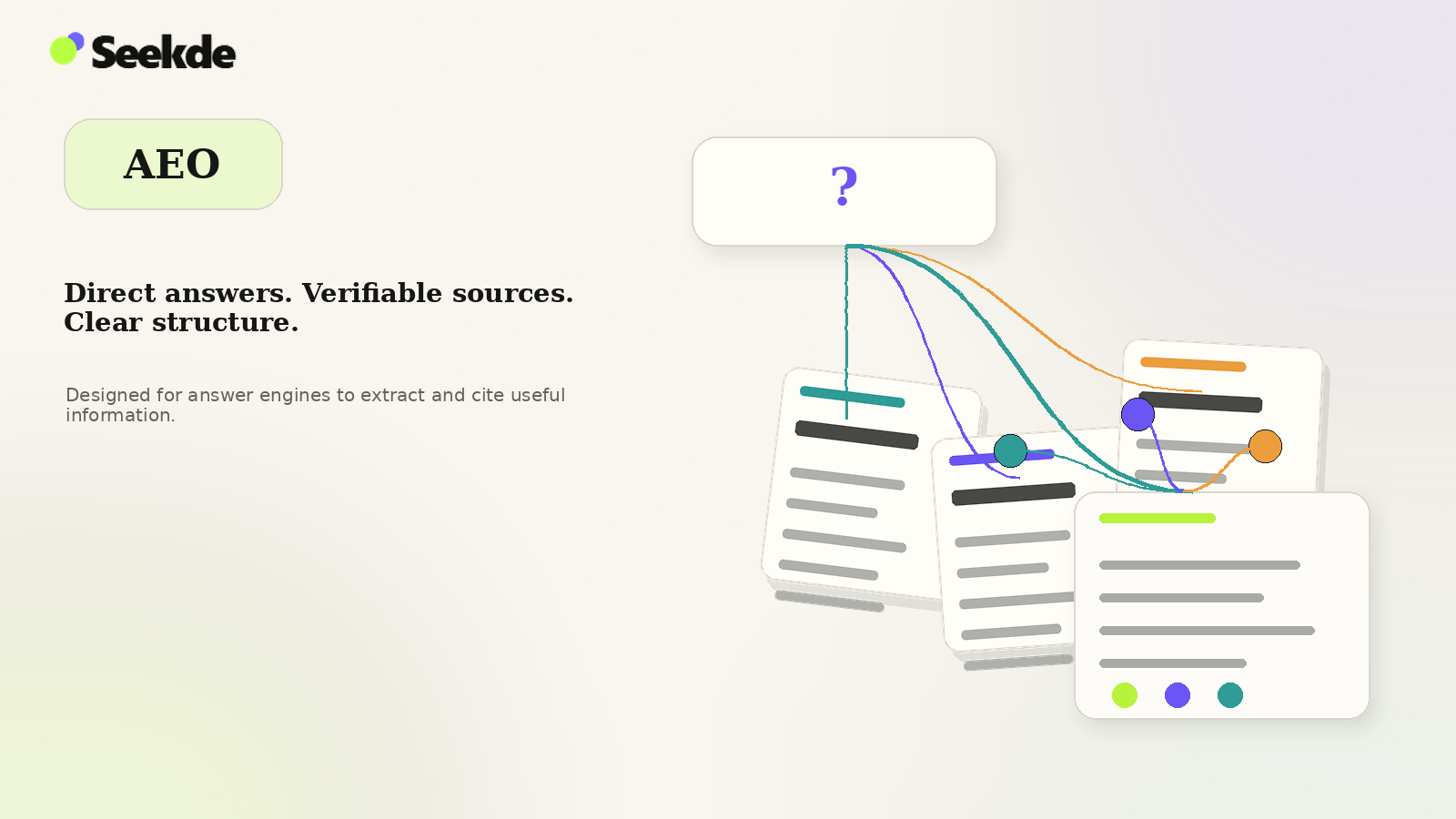
Answer engine optimization (AEO) is framed within Seekde’s working taxonomy as the process of structuring, formatting, and refining web content so that search engines and digital assistants can extract direct, authoritative, single-source answers to specific user questions. While "AEO" is an industry term without a universal standardized technical definition, Seekde defines AEO around single-source passage extraction, distinguishing it from broader multi-source synthesis and focusing on discrete passages that can be extracted cleanly for featured snippets, voice search responses, and direct answer carousels.
While the phrase has gained renewed attention with the rise of conversational AI, AEO is an established discipline rooted in search mechanics introduced over a decade ago. When Google launched programmatic featured snippets in 2014 and voice assistants (Apple Siri, Amazon Alexa, Google Assistant) became mainstream, search engines required algorithms capable of isolating a single, factual answer from millions of indexed documents without forcing the user to click through and browse.
Understanding AEO is critical for digital publishers because it defines Seekde’s working boundary between single-source factual extraction and multi-source generative synthesis, a distinction central to modern Generative Engine Optimization (GEO).
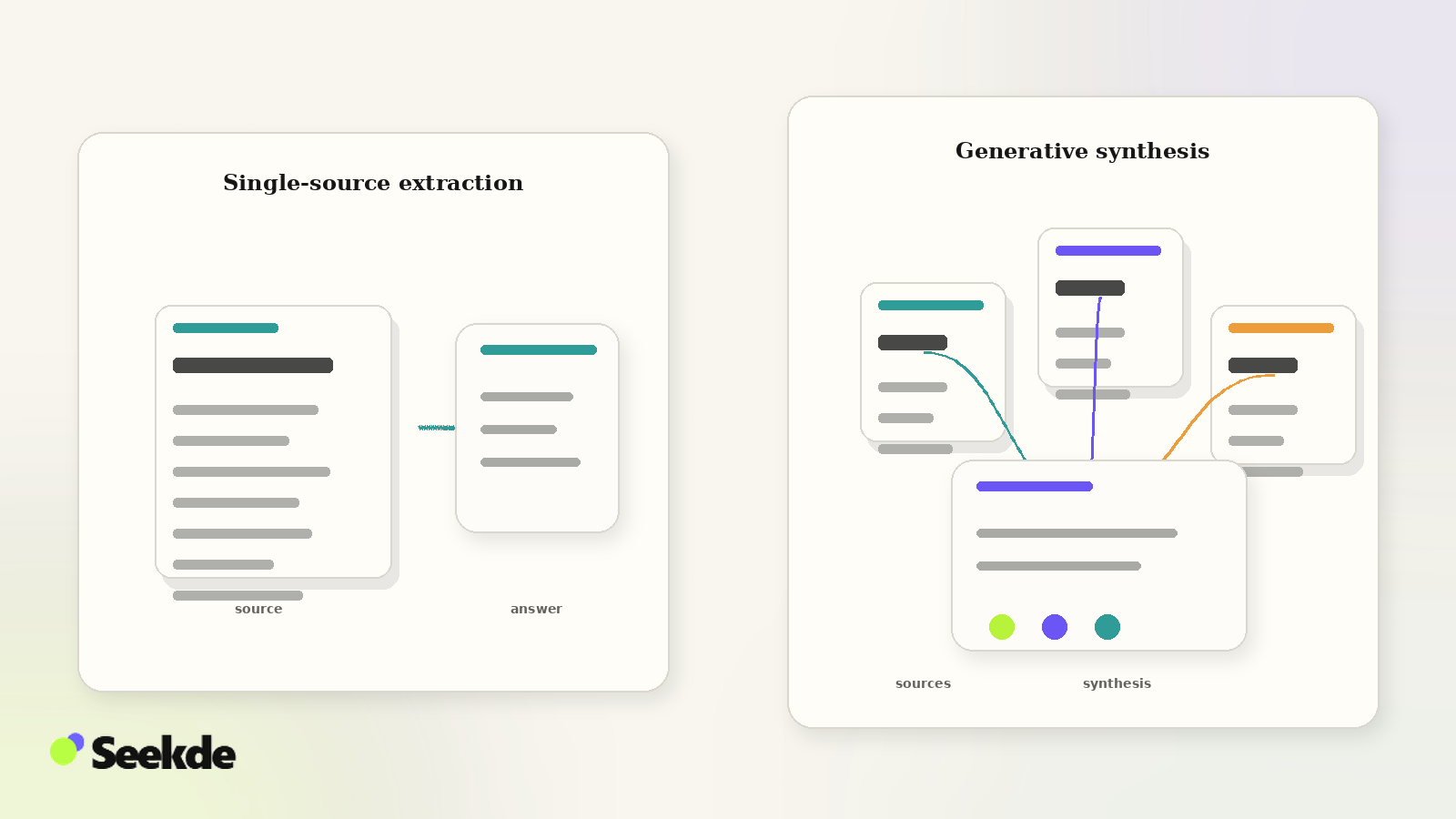
Single-Source Extraction vs. Generative Synthesis
To apply AEO effectively, practitioners must recognize how direct answer extraction differs from multi-source generative answers.
- Mechanism
-
- Extracted verbatim or extractive summary
- Single domain credited
- High syntactic precision
- SERP Manifestation
-
- Featured Snippet
- Voice Assistant Readout
- Instant Answer Box
- Direct Answer Carousel
- Mechanism
-
- Synthesized from retrieved context
- Multiple sources cited
- Probabilistic generation
- SERP Manifestation
-
- Google AI Overview
- ChatGPT Search Answer
- Perplexity Multi-Cite
- Copilot Summary
In single-source extraction, the search engine searches for an extractive candidate passage to present as a direct snippet or summary with attribution. If a paragraph depends on extensive context from distant sections to be understood, it is generally less readily extractable than a self-contained alternative.
In generative search, by contrast, language models read passages from multiple different websites, blend the concepts, and compose an original answer. To understand how these two models compare across operational metrics, explore our side-by-side analysis of GEO vs SEO vs AEO.
The Seekde Direct Answer Extraction Model
To make a passage readily extractable, content creators can eliminate syntactic ambiguity. Seekde models direct answer readiness through the Inverted-Pyramid Extraction Triangle, an editorial framework designed for passage clarity:
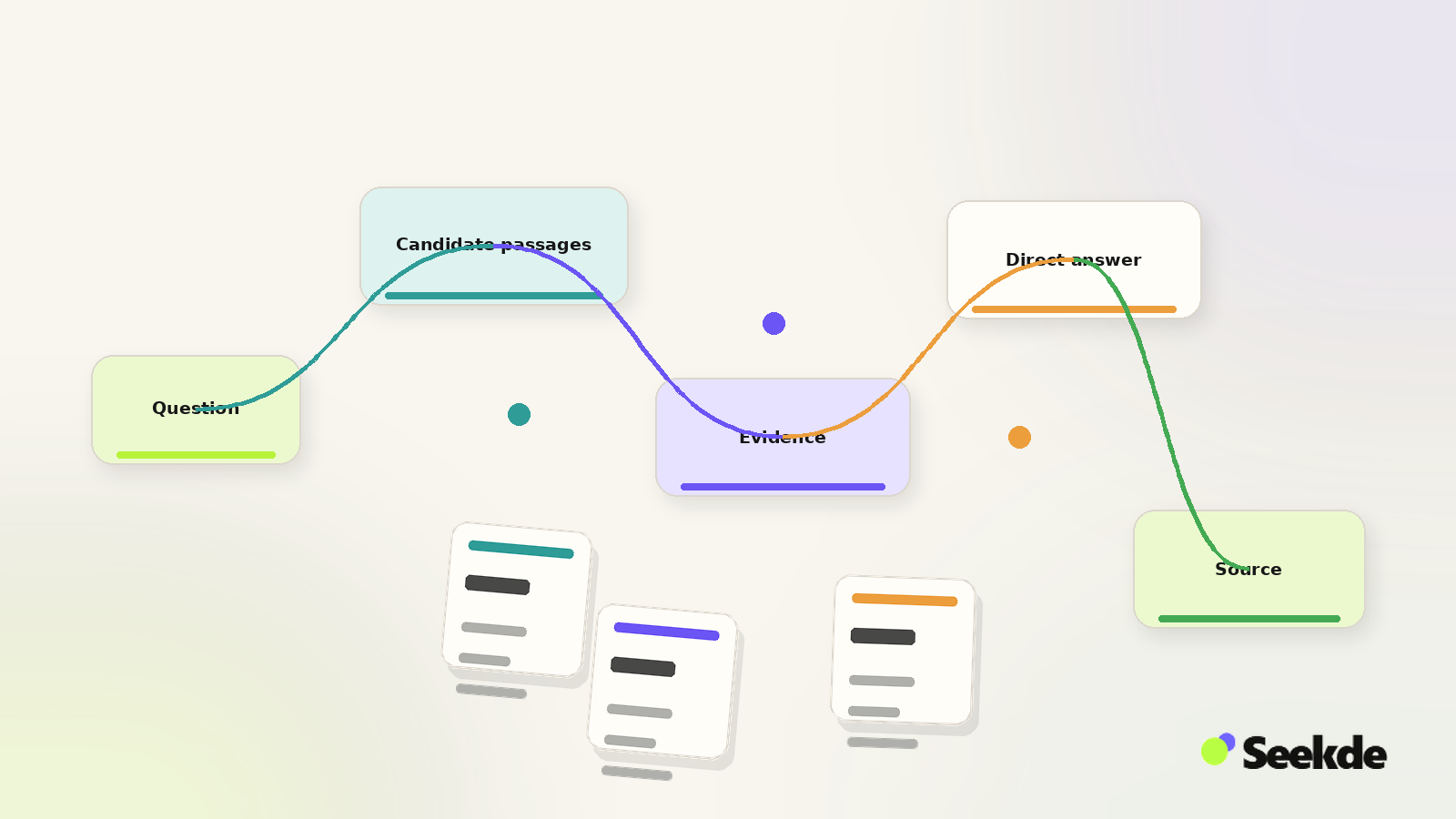
1. Question Proximity (Seekde Editorial Heuristic)
While Google does not mandate exact heading proximity to award a featured snippet, search extraction algorithms map user queries to semantic document sections. If an <h2> reads "What is customer acquisition cost?", placing the core factual answer in the opening sentences of the following section provides immediate clarity for both automated extractors and human readers.
2. Self-Contained Proposition
An extractable answer should stand independently. Clear extraction calls for strict pronoun discipline:
- Ambiguous (Poor Extraction Candidate): "It helps them reduce this by tracking those numbers across their campaigns." (Unresolved pronouns obscure meaning outside full context.)
- Self-Contained (Strong Extraction Candidate): "Customer acquisition cost (CAC) measures the total sales and marketing expense required to acquire a single new customer over a specific operating period."
3. Contextual Nuance and Supporting Evidence
While the opening passage provides an immediate concise summary, the remainder of the section should deliver the depth, nuance, and methodology that human readers expect when clicking through.
Technical Formatting: Seekde Editorial Heuristics
Google does not enforce rigid length limits, mandatory table elements, or specific list syntax to qualify for a featured snippet; snippet selection is algorithmic and determined by relevance to the query. However, Seekde has identified several editorial heuristics that improve passage clarity and extraction eligibility:
Descriptive Heading Hierarchy
Ensure heading levels reflect a logical document outline. Framing headings (<h2>, <h3>) around authentic user inquiries rather than ambiguous marketing teasers makes the section’s intent explicit for readers and automated systems.
Concise Definitional Framing (Seekde Heuristic)
Definitional snippets commonly feature concise summaries that articulate:
[Term] is [Classification / Category] that [Primary Function / Distinctive Characteristic].
Keeping opening definitions concise and self-contained satisfies quick informational intent without sacrificing surrounding depth.
Clean HTML Tables for Comparative Data (Readability Heuristic)
For comparative queries, pricing models, and technical specifications, semantic HTML tables (<table>, <thead>, <th>, <tbody>, <tr>, <td>) serve as an effective readability and structural heuristic. While clean markup is not a guaranteed path to tabular snippets, semantic tables organize multi-attribute data legibly for human readers and crawlers alike.
Numbered Lists for Procedural Tasks (Structural Heuristic)
For procedural workflows and step-by-step guides, ordered lists (<ol>) with distinct action verbs provide a clear structural heuristic, presenting sequential steps legibly for readers and extraction parsers.
The Role of Structured Data (Schema.org): 2026 Status
Structured data markup provides explicit machine-readable metadata about entities and relationships. However, publishers must distinguish between semantic metadata and search engine rich-result eligibility. Google does not require schema to award a standard featured snippet, and the rich-result landscape has changed substantially:
FAQPage: Complete Deprecation (2026)
Historically, FAQPage JSON-LD generated expandable question-and-answer rich snippets directly in Google SERPs.
- In August 2023, Google restricted FAQ rich results primarily to well-known, authoritative government and health websites.
- In May 2026, Google deprecated the FAQ rich-result feature entirely across all websites (it stopped appearing globally on May 7, 2026), and Google formally removed the documentation in June 2026.
- While
FAQPagemarkup remains valid Schema.org vocabulary, it no longer triggers search rich results in Google.
HowTo: Formal Deprecation (2023)
Google officially deprecated HowTo rich results for mobile and desktop in September 2023. Procedural guides no longer generate interactive step-by-step rich results via HowTo schema.
QAPage: Legitimate Community Scope
According to Google’s current documentation, QAPage structured data is intended exclusively for pages where the entire page is dedicated to a single question followed by user-submitted answers (such as community forums, developer message boards, or customer support Q&A threads).
QAPagemust not be applied to ordinary FAQ pages, corporate blog posts answering a question, or articles where the content team authors a single answer.
Entity and Identity Schema
For enterprise AEO, focus structured data on machine-readable entity identity:
Organization: Disambiguates corporate identity, official domains, and public entity references.ProductandSoftwareApplication: Communicates formal technical parameters, versions, and software classifications.
The Business Reality of AEO: Navigating the Zero-Click Landscape
The pursuit of AEO comes with an inherent strategic tension: the zero-click search phenomenon.
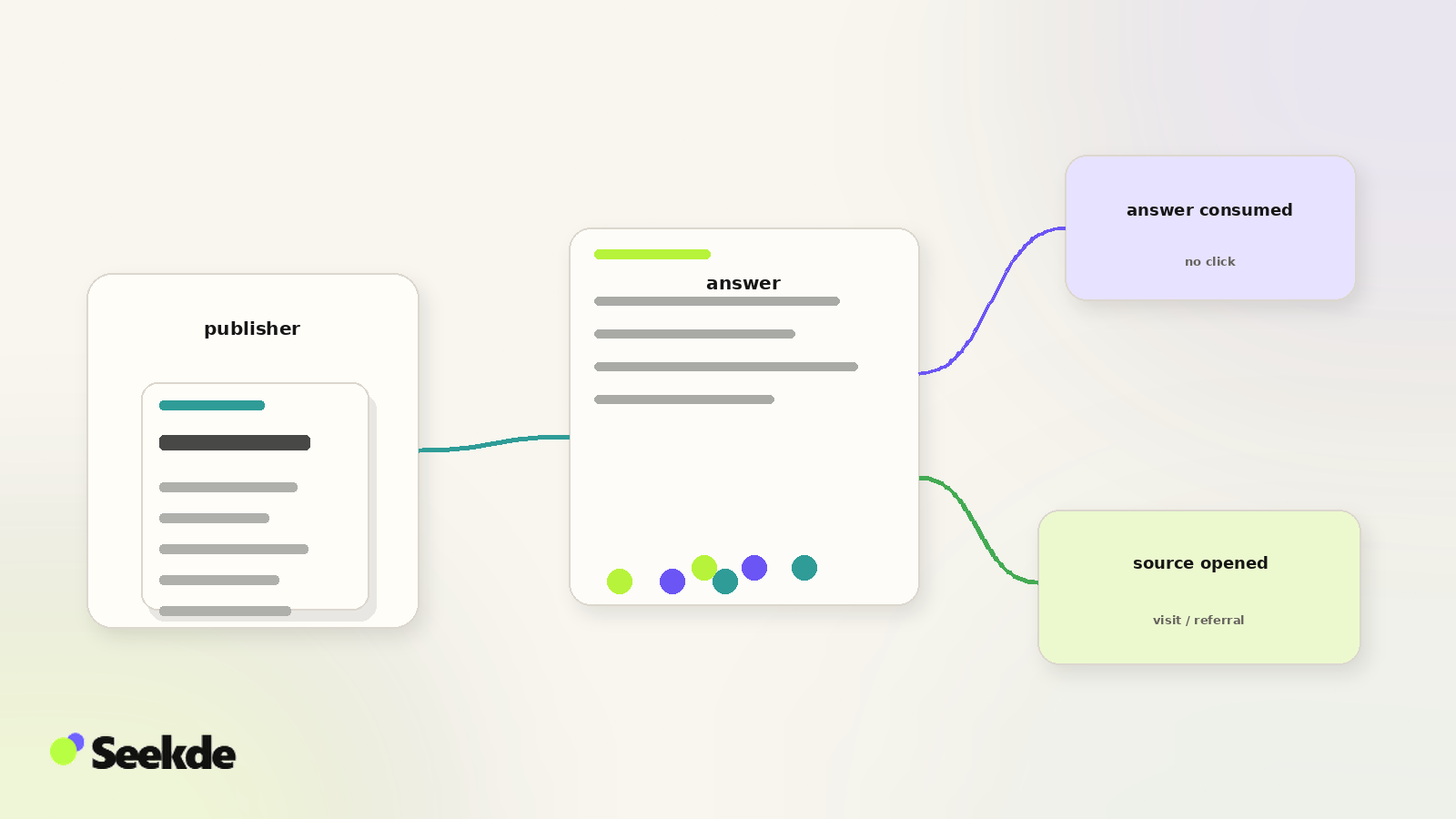
When an answer engine extracts your content to resolve a user’s question directly on the search results page, the searcher often achieves their goal without clicking through to your site. This dynamic is reshaping digital publishing and traffic economics, as detailed in our analysis of how search is changing from links to generated answers.
Despite reduced referral rates, winning direct answer placements provides critical strategic benefits:
- Brand Authority and Mindshare: Featured-snippet visibility can increase brand prominence for the query, although it does not establish category leadership.
- High-Intent Follow-Through: Users who continue from a direct answer to the source may be seeking greater depth, but downstream conversion effects vary by query and site.
- Voice and Assistant Dominance: Some voice-assistant experiences may deliver a single spoken answer rather than a list of links.
An Actionable AEO Editorial Checklist
Before publishing content targeted at question-based search queries, audit the draft against this six-point Seekde checklist:
- [ ] Query Match: Does an
<h2>or<h3>match an authentic user question? - [ ] Immediate Resolution: Does the text directly answer the question within the opening sentences following the heading?
- [ ] Pronoun Discipline: Can the opening passage be understood in isolation without surrounding paragraphs?
- [ ] Format Alignment: Is sequential information formatted as
<ol>, comparative information as<table>, and categorical information as<ul>? - [ ] Schema Accuracy: Is schema restricted to valid entity and product types, avoiding deprecated FAQ/HowTo rich-result expectations?
- [ ] Tracking Readiness: Are you monitoring direct-answer and snippet visibility through a documented observation process, such as the sampling principles described in Seekde’s research methodology?
By systematically applying these principles, publishers improve the structural clarity and extraction readiness of their core knowledge assets across traditional direct answer formats and conversational search interfaces.