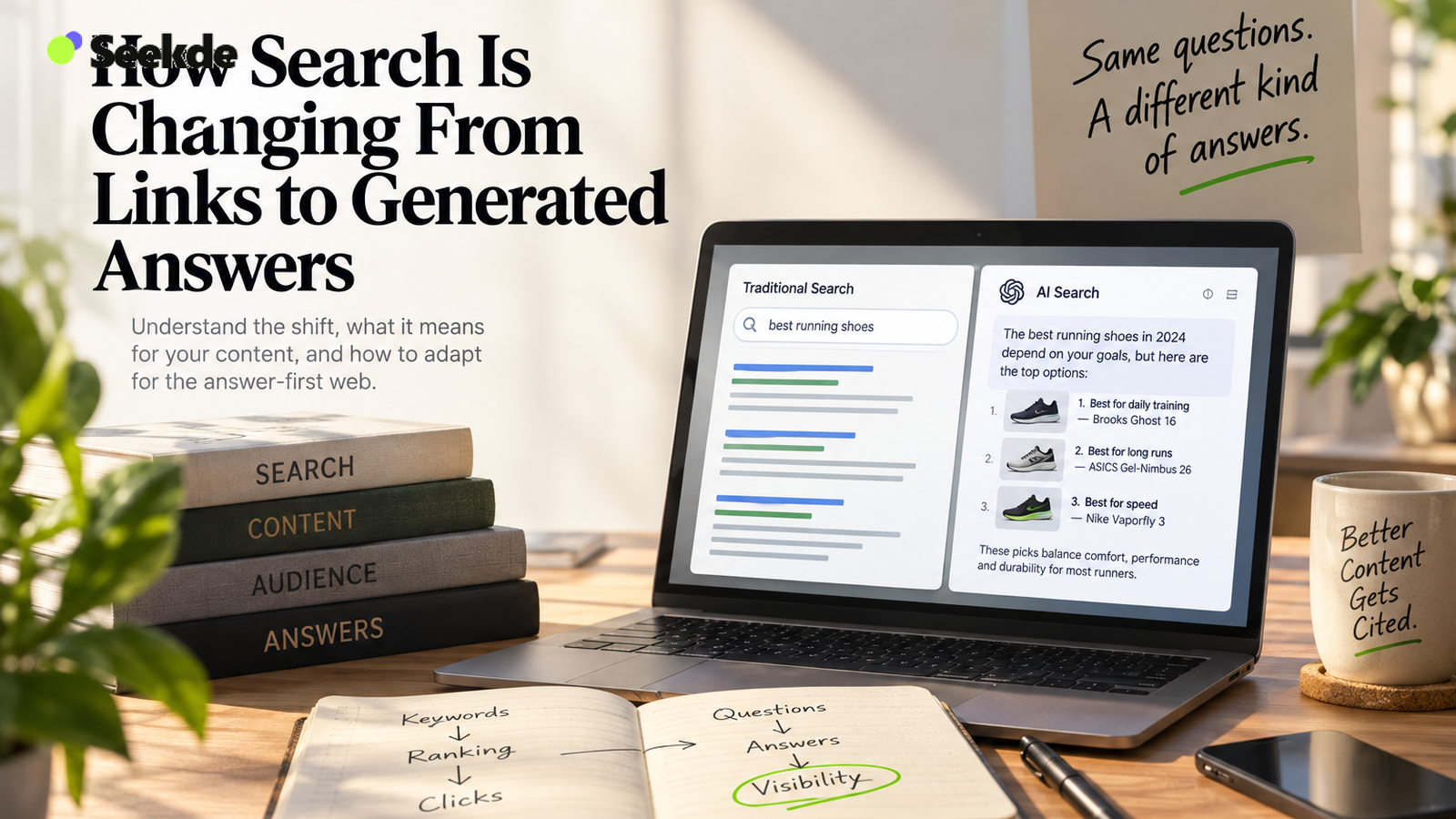
The search ecosystem is undergoing its most profound architectural and economic transformation in three decades: transitioning from an "index-and-direct" model based on hyperlinks to an "ingest-and-resolve" model based on AI-generated synthesis. For over twenty-five years, the fundamental compact of the web was straightforward: search engines crawled open-web publications, indexed their content, and directed qualified user traffic back to publishers via clickable organic links.
Today, conversational AI interfaces, Google AI Overviews, ChatGPT Search, and Perplexity are rewriting this contract. Rather than directing users to external websites to read articles, compare products, and synthesize information for themselves, generative answer engines read the web on behalf of the user and deliver a synthesized answer directly within the search interface.
This evolution is fundamentally altering digital publishing economics, corporate search marketing strategies, and consumer information behavior.
The Architectural Transition: Index-and-Direct vs. Ingest-and-Resolve
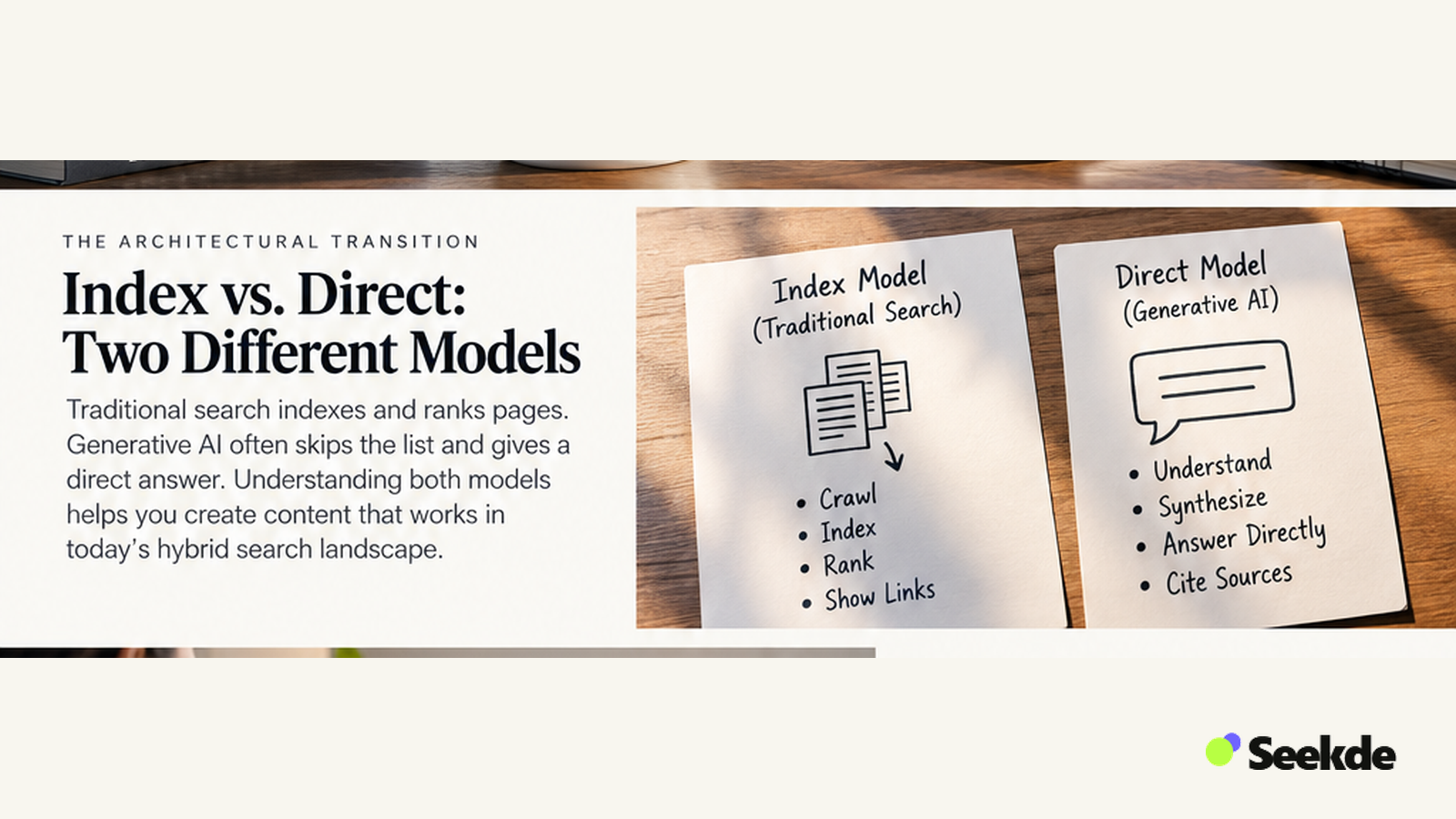
To understand the macro forces transforming digital discovery, Seekde models the structural divergence between legacy search and generative answer engines through the following analytical framework:
- Architecture Pipeline
[Publisher Content] → [Search Index] → [SERP Links] → [Traffic]- Search Engine Role
- Intermediary directory routing users to third-party domains
- Value Exchange
- Free web content in exchange for organic referral visits
- Architecture Pipeline
[Publisher Content] → [RAG Pipeline] → [AI Answer] → [Attribution]- Search Engine Role
- Synthesis engine resolving user queries directly on-surface
- Value Exchange
- Web content ingested and synthesized; user resolved on-platform
The "Index-and-Direct" Model
Under traditional search paradigms, the engine primarily routed users through lists of external links. While rich results, knowledge panels, and featured snippets emerged well before 2023 to answer discrete queries directly on-surface, the foundational value exchange remained pointer-based: search engines indexed third-party publications and directed qualified referral traffic to external websites.
The "Ingest-and-Resolve" Model
In the generative search paradigm, the search system increasingly functions as an information aggregator and answer synthesizer. Rather than routing searchers to multiple external websites, the engine synthesizes an attributed answer directly within the search interface from retrieved candidate sources. While the degree of multi-source synthesis and real-time retrieval varies across queries and platforms, the user’s intent is frequently resolved on the search surface itself.
The Zero-Click Reality and Publisher Traffic Economics
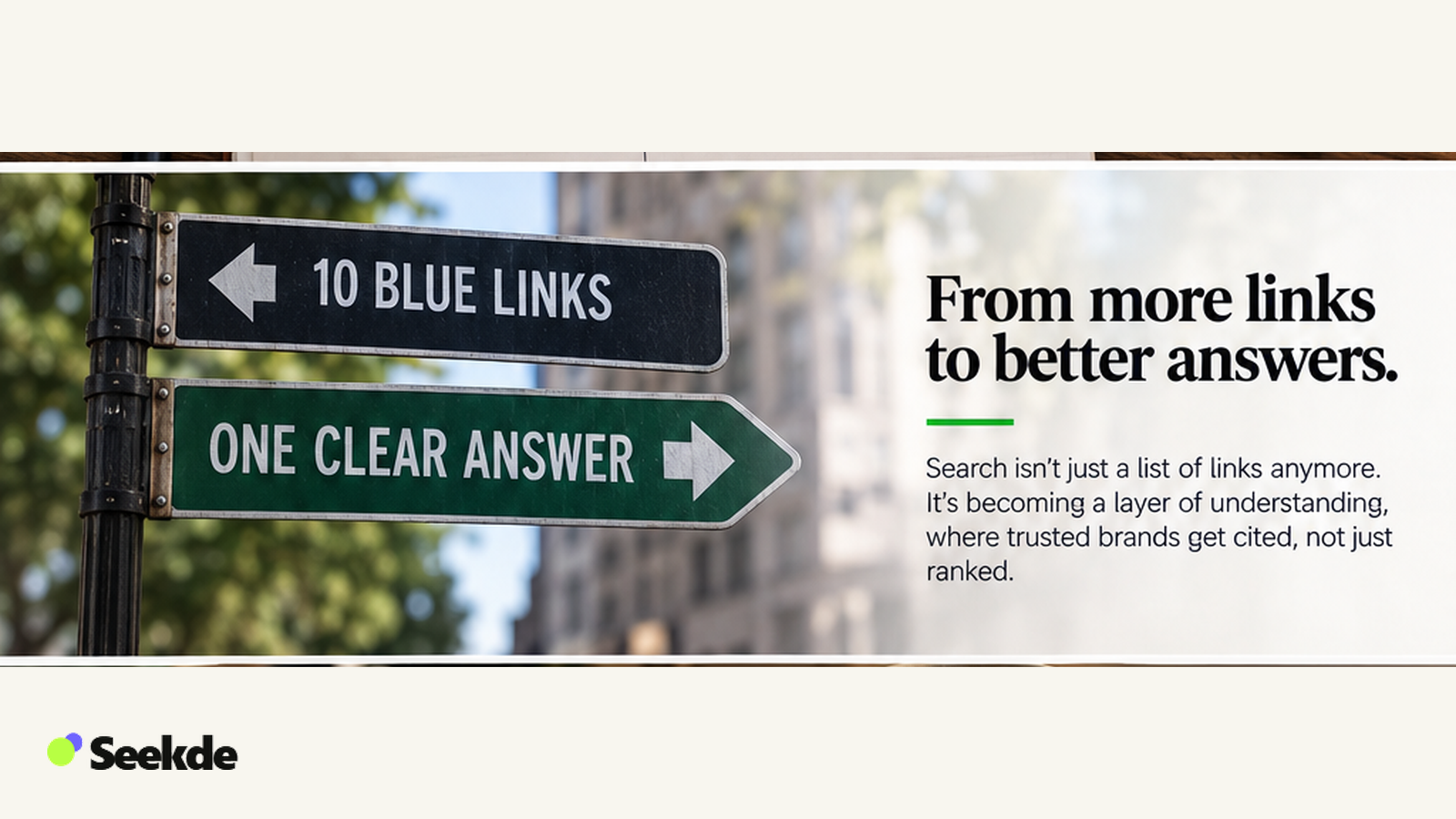
One important pressure accompanying answer-first search is the continued growth of zero-click behavior—queries that resolve without a user clicking through to an external organic website.
Empirical Zero-Click Studies: 2024 and 2026 Evidence
Search industry researchers have empirically measured this shifting click behavior across millions of browsing sessions:
- SparkToro & Datos (2024 Study): Analyzing clickstream data from a panel of millions of desktop and mobile devices, Rand Fishkin and Datos documented that 58.5% of Google searches in the United States and 59.7% in the European Union concluded without a click to any web property (organic or paid).
- SparkToro & Similarweb (2026 Follow-Up Study): Measuring US search behavior between January and April 2026, Rand Fishkin reported in In 2026, Less than One Third of Google Searches Still Send a Click that 68.01% of Google searches ended without a click to the open web, coinciding with broader zero-click behavior as on-SERP features and generative AI Overviews expand.
Methodology and Panel Limitations:
While these studies illustrate macro behavioral trends, practitioners should recognize their methodological parameters: both studies rely on opt-in clickstream panels across desktop and mobile browser environments, exclude native mobile search app browsing, and reflect differing panel compositions between 2024 (Datos) and 2026 (Similarweb). Consequently, direct longitudinal comparisons must account for panel variations.
Generative answers can intensify zero-click dynamics across informational queries:
- Top-of-Funnel Educational Queries: Broad definitional queries (e.g., "How does quantum computing work?") are answered directly by generated overviews, which can reduce the need for some users to click through.
- Product Comparisons: Rather than clicking multiple review articles, users receive generated comparison matrices evaluating features, pricing, and trade-offs directly inside the answer card.
- Troubleshooting and Procedural Guides: Step-by-step technical solutions are extracted and formatted as numbered lists directly on the SERP.
| Transition Stage | Publisher Economic Reality |
|---|---|
| Stage 1: Open Web Indexation | Free indexing in exchange for organic referral traffic |
| Stage 2: Fragmented Scraping | Early featured snippets reduce basic click-through rates |
| Stage 3: Zero-Click Synthesis | AI models resolve queries directly on the search interface |
| Stage 4: Attribution & Deals | Direct content licensing agreements and citation visibility KPIs |
As the industry enters Stages 3 and 4 of this transition, publishers that depend heavily on search-referral advertising can face revenue pressure, encouraging diversification toward subscriptions, licensing, direct relationships and other models.
The Evolution of Search Marketing KPIs

As the mechanics of search change, the metrics used to evaluate search success must evolve. Measuring digital visibility exclusively through keyword ranking positions and organic referral sessions provides an increasingly incomplete picture of market reality:
| Legacy Search Metric | Generative Answer Metric | Strategic Meaning |
|---|---|---|
| Rank Position (1–10) | Model Mention Share (%) | How frequently your brand is included in synthesized answers across prompt clusters |
| Organic Impressions | Citation Frequency | How often your specific domain URLs are cited as supporting evidence in answer cards |
| Organic CTR | Attribution Sentiment | Whether the AI engine describes your product as a recommended leader, niche tool, or flawed alternative |
| Keyword Volume | Prompt Cluster Coverage | The breadth of complex, multi-turn conversational intents your brand successfully resolves |
In an answer-driven landscape, an organization may preserve brand visibility across answer surfaces even as top-of-funnel organic blog traffic declines, provided the brand is cited as a relevant authority when AI assistants evaluate solutions.
To understand how enterprises adapt their operational discovery strategies to this reality, review our comprehensive AI search optimization strategy and our cross-paradigm SEO vs AEO vs GEO comparison.
Content Licensing and the Future of Web Attribution
A critical byproduct of the generative transition is the emergence of direct content licensing agreements between major AI developers and premier digital publishers.
Over recent years, leading media conglomerates have announced formal licensing partnerships with OpenAI:
- Axel Springer (December 2023)
- Financial Times (April 2024)
- News Corp (May 2024)
- Dotdash Meredith (May 2024)
- Time (June 2024)
- Condé Nast (August 2024)
These agreements establish commercial and technical frameworks for content access, model training, and product attribution. However, specific terms, rights, integrations, attribution displays, and commercial compensation vary significantly by agreement, and many financial and technical terms remain undisclosed.
Crucially, licensing agreements do not guarantee preferential algorithmic citation or ranking in general organic search. In algorithmic web retrieval, independent publishers and corporate brands continue to compete on content quality, entity authority, and technical accessibility.
Conclusion: Adapting to the Answer-First Web
The shift from link-based search to generated answers does not signify the death of web publishing. Human curiosity, technical troubleshooting, complex enterprise software evaluation, and deep investigative journalism consistently call for authoritative primary documentation.
However, the era of publishing superficial, rehashed summaries simply to harvest programmatic ad impressions is effectively over. Generative models can summarize existing web knowledge far faster and more conveniently than a human can click through five ad-heavy web pages.
To thrive in the answer-first web, organizations must:
- Invest in Original Information Value: Publish proprietary datasets, verified experimental benchmarks, and transparent methodologies that cannot be synthesized from common knowledge.
- Track Multi-Model Visibility: Establish a documented multi-engine observation process or independently verified specialist monitoring tools to observe brand representation and citation trends across major answer engines, adhering to empirical frameworks such as Seekde’s research methodology.
- Maintain Rigorous Editorial Integrity: Adhere to verifiable standards of evidence and public correction protocols, such as Seekde’s Editorial and Corrections Policy.
By embracing the transition from link building to authoritative information architecture, digital leaders ensure their knowledge remains indispensable to both human decision-makers and the intelligent systems that serve them.