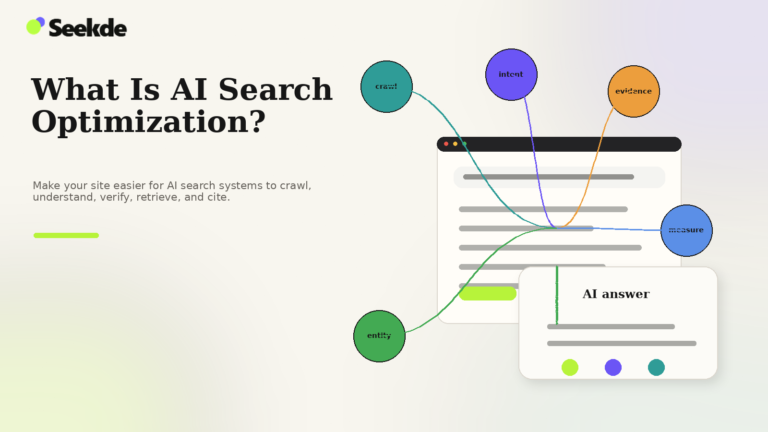
AI search optimization is the practice of making web content easier for AI search systems to crawl, understand, verify and cite. It combines technical accessibility, intent-focused content and verifiable entity context to help publishers maintain discoverability as search experiences expand from ranked links to synthesized conversational answers.
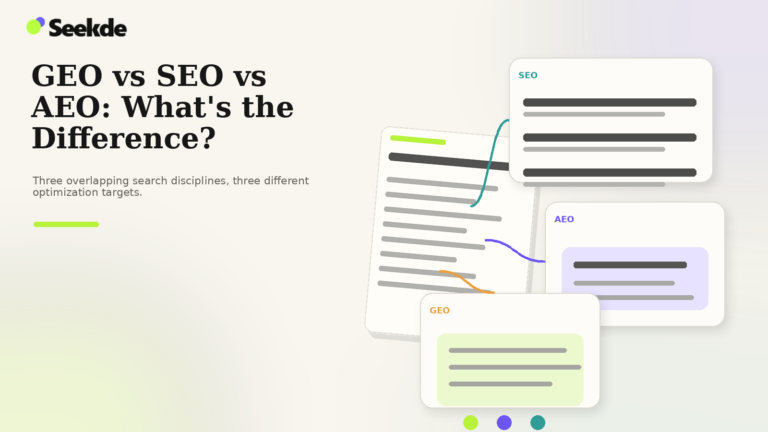
SEO focuses on helping pages rank and be discovered in search, AEO on making answers easy to extract, and GEO on making content useful for generative systems to retrieve, synthesize and cite. The three overlap in practice and are better treated as complementary disciplines than as competing replacements.
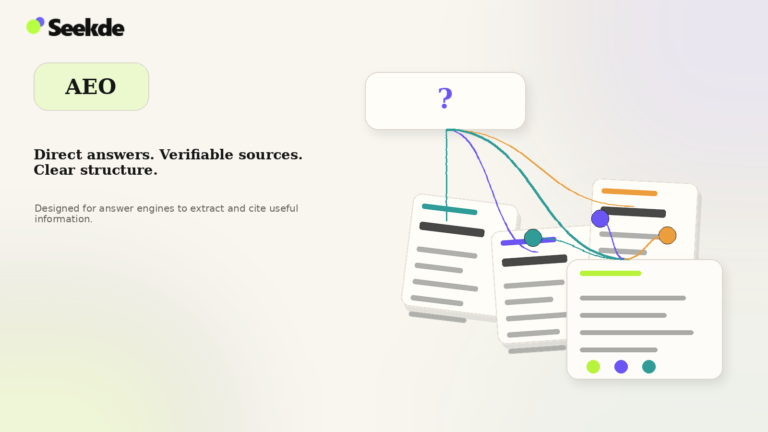
Answer Engine Optimization (AEO) is the practice of structuring and publishing content so answer engines can extract, verify, and present a direct response to a user's question. Strong AEO combines clear self-contained answer passages, credible sourcing, useful semantic structure, and technical accessibility, while recognizing that no formatting, schema, or optimization tactic can guarantee selection or citation.
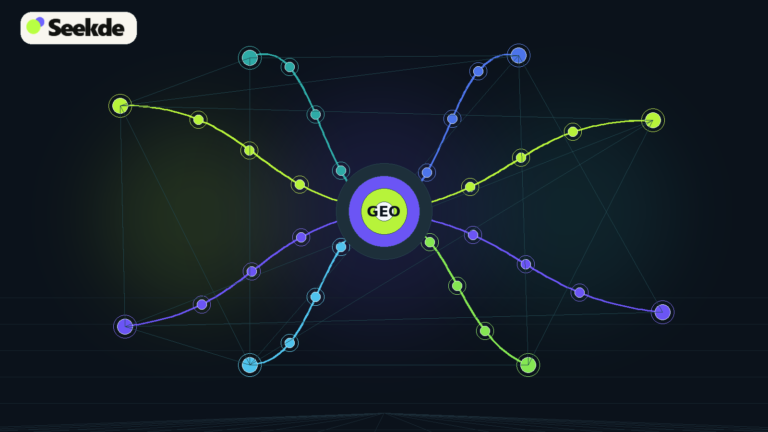
Generative Engine Optimization (GEO) is the practice of making web content easier for generative AI systems to retrieve, understand, verify, and synthesize into answers. In practical terms, GEO combines strong SEO foundations with clear entity signals, dense factual claims, synthesis-friendly structure, and verifiable attribution so useful information can be selected and cited across generative search experiences.
Generative answer engines can combine query rewriting, retrieval, reranking and language-model generation to construct answers from multiple sources. Exact pipelines vary by platform, so this architectural overview focuses on commonly documented or observable retrieval-and-synthesis stages rather than assuming one universal architecture.
Search Seekde
Press Esc to close · Search guides, explainers & analyses.