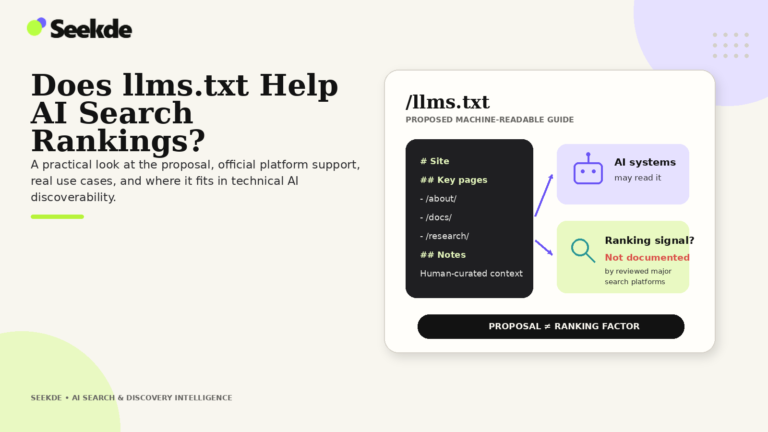
The llms.txt proposal is a community format for publishing a curated Markdown map of important site content. Major search providers do not document it as a ranking, indexing or citation requirement, so treat it as an optional documentation aid rather than an SEO dependency.
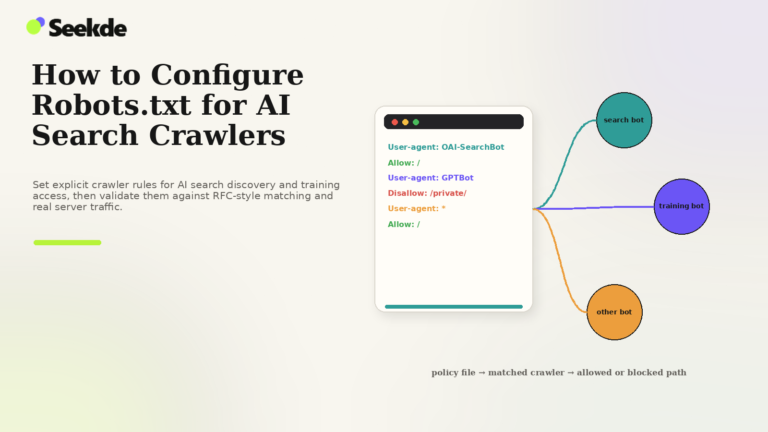
To configure robots.txt for AI search crawlers, create explicit User-agent groups for the bots you care about, allow search or retrieval crawlers that should reach public content, and block training crawlers or sensitive paths only where that matches your policy. Avoid contradictory wildcard rules, validate the file using RFC-style user-agent and path matching, and confirm real crawler access in server logs. Robots.txt controls crawling permissions; it does not guarantee indexing, retrieval, citation, or ranking.
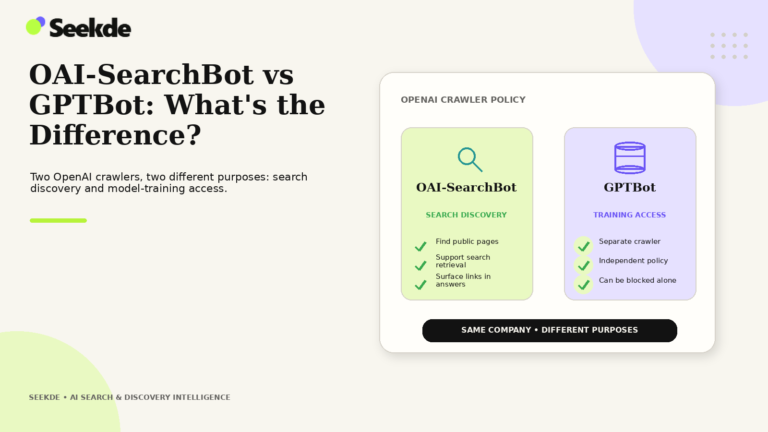
OAI-SearchBot supports ChatGPT search discovery, while GPTBot crawls content that may be used to improve OpenAI’s generative AI models. Configuring robots.txt allows webmasters to selectively permit search indexing via OAI-SearchBot while independently restricting model training ingestion by GPTBot based on organizational copyright policy.
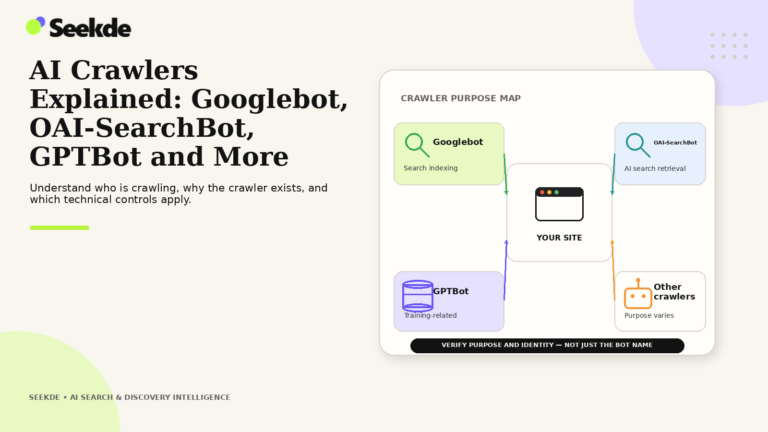
AI crawlers are automated bots deployed by artificial intelligence companies to collect training data or retrieve real-time search sources. Webmasters can manage crawler access through robots.txt, distinguishing between search discovery bots like OAI-SearchBot and PerplexityBot versus large-scale model training scrapers like GPTBot and CCBot.
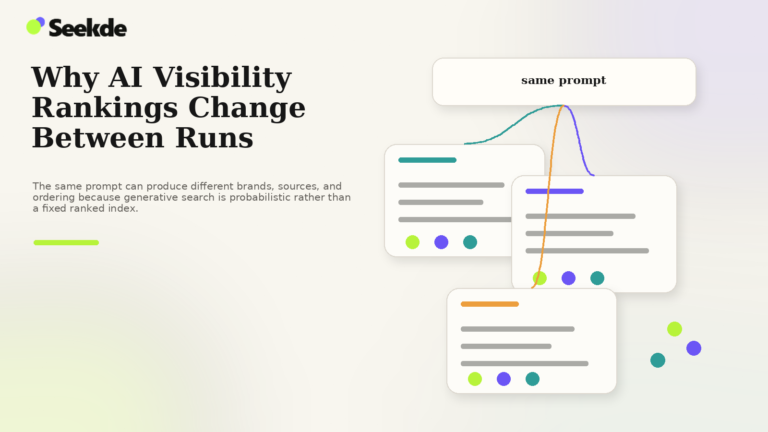
AI-search results can vary between repeated runs because retrieval, generation, routing, source availability and other runtime conditions may change. Measure repeated observations and trend ranges rather than treating one answer as a stable ranking.
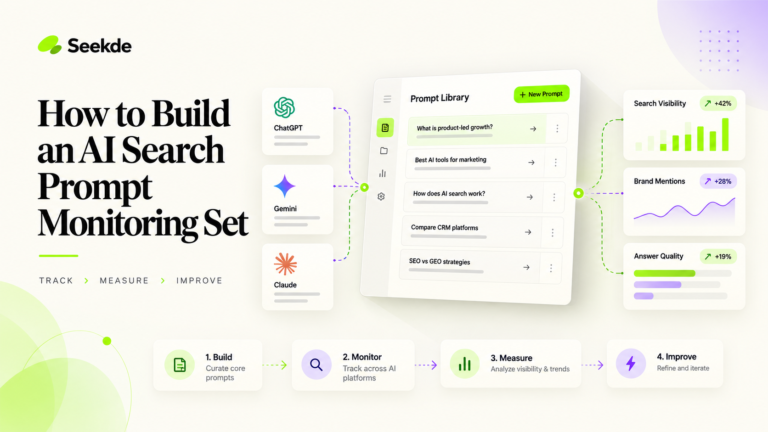
An AI search prompt monitoring set is a structured library of neutral, intent-based prompts used to track how brands, pages, and answers appear across AI search engines over time. Build it by organizing prompts by search intent, writing controlled query variations, versioning the set, and reviewing results on a recurring cadence so visibility changes can be measured and improved.
Search Seekde
Press Esc to close · Search guides, explainers & analyses.