Practical implementation guides, technical audits, step-by-step walkthroughs, measurement frameworks, crawler configuration guidance, and editorial optimization workflows for generative search discovery.
28published guides
Every guide focuses on reproducible workflows, crawl accessibility, schema standards, and empirical observation rather than speculative ranking shortcuts.
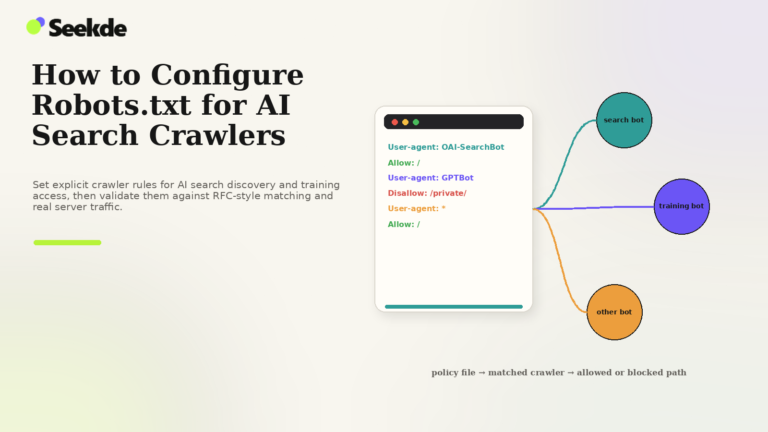
To configure robots.txt for AI search crawlers, create explicit User-agent groups for the bots you care about, allow search or retrieval crawlers that should reach public content, and block training crawlers or sensitive paths only where that matches your policy. Avoid contradictory wildcard rules, validate the file using RFC-style user-agent and path matching, and confirm real crawler access in server logs. Robots.txt controls crawling permissions; it does not guarantee indexing, retrieval, citation, or ranking.
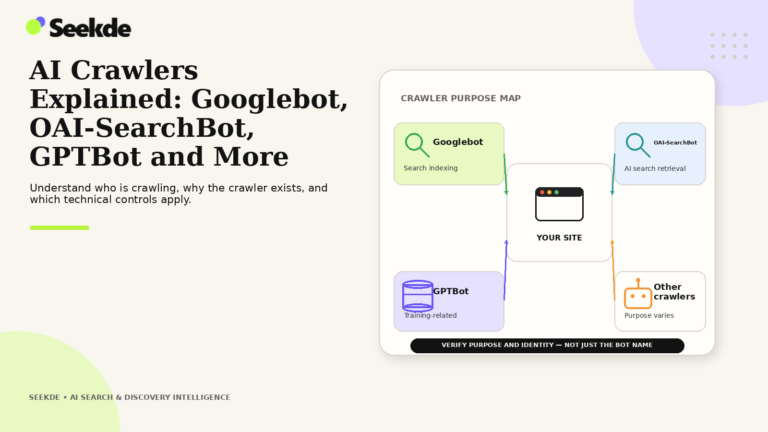
AI crawlers are automated bots deployed by artificial intelligence companies to collect training data or retrieve real-time search sources. Webmasters can manage crawler access through robots.txt, distinguishing between search discovery bots like OAI-SearchBot and PerplexityBot versus large-scale model training scrapers like GPTBot and CCBot.
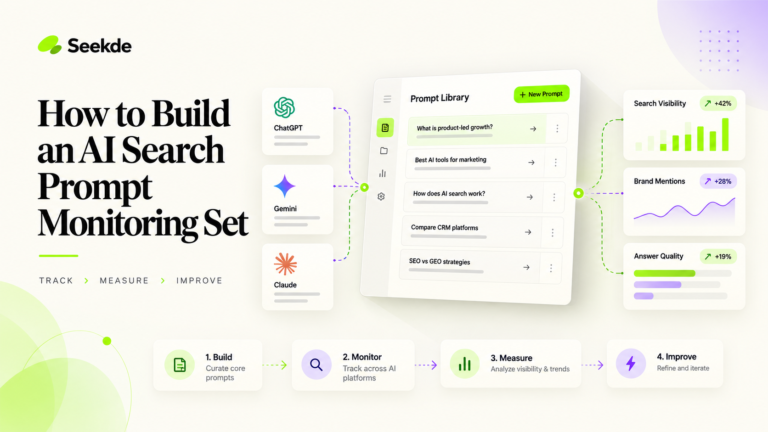
An AI search prompt monitoring set is a structured library of neutral, intent-based prompts used to track how brands, pages, and answers appear across AI search engines over time. Build it by organizing prompts by search intent, writing controlled query variations, versioning the set, and reviewing results on a recurring cadence so visibility changes can be measured and improved.
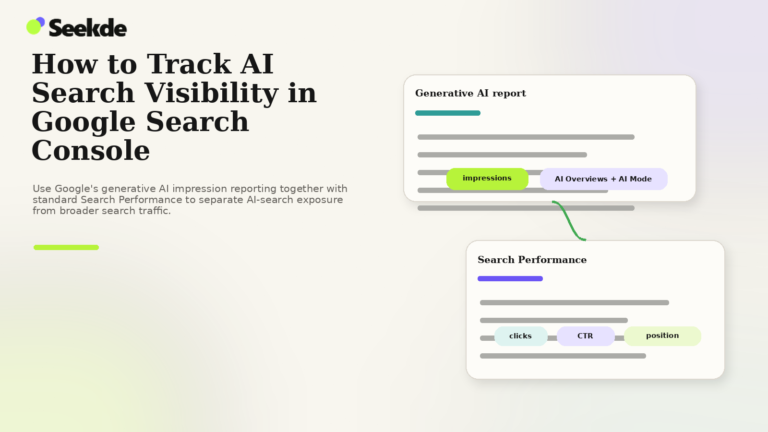
Google Search Console’s Generative AI report tracks generative-search impressions; pair it with standard Search Performance to evaluate clicks and traffic. Because AI Overviews alter click-through behavior, evaluating both surface-level impressions and downstream engagement provides a reliable measurement baseline for generative search presence.
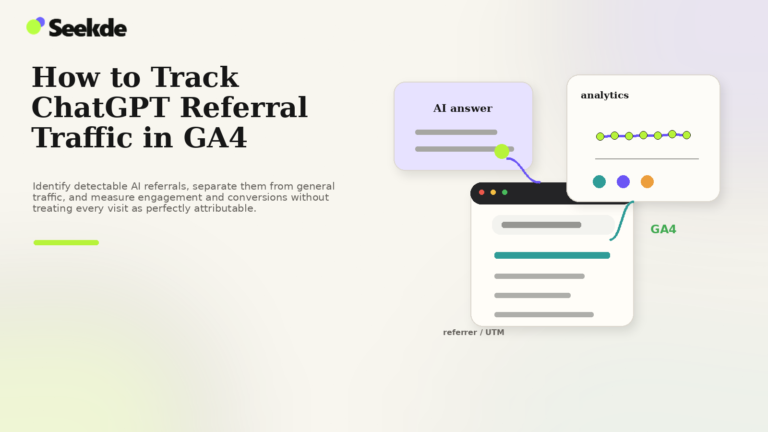
GA4 can identify ChatGPT referral traffic when a detectable referrer or campaign parameter reaches your site. Use custom channel groupings or explorations for known AI referrers, and treat unattributed Direct traffic as unknown rather than assuming it came from ChatGPT.
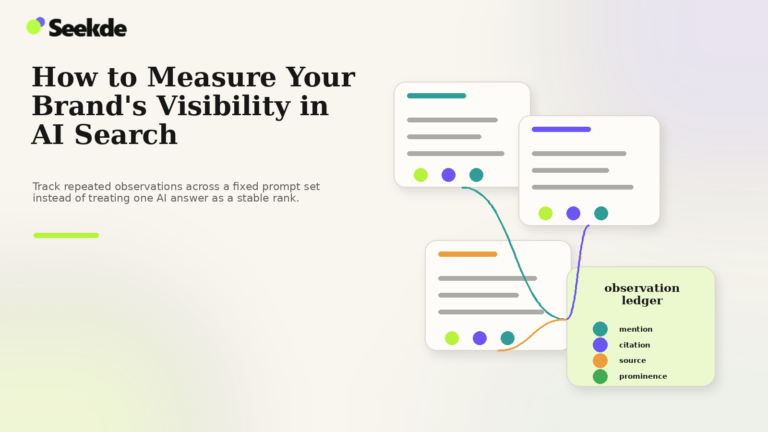
Measuring brand visibility in AI search involves tracking how frequently and accurately your organization is mentioned or cited across generative engines. Teams can evaluate source attribution by running standardized prompt sets, monitoring unlinked brand references, and tracking referral traffic in web analytics across recurring test cycles.
Search Seekde
Press Esc to close · Search guides, explainers & analyses.