Generative Engine Optimization (GEO) tools for in-house SEO teams are specialized software platforms that monitor brand citations, analyze AI answer content gaps, and track conversational Share of Voice across corporate prompt sets. While agency teams often prioritize multi-tenant client management and white-label reporting, in-house search practitioners typically focus on internal workflow integration: embedding generative search insights into existing content operations, collaborating across product marketing and engineering, and demonstrating brand visibility to executive leadership.
In-house SEO professionals can no longer rely solely on conventional keyword rank trackers. When a target buyer asks ChatGPT Search, Perplexity, or Google AI Overviews for enterprise software recommendations, the engine synthesizes answers dynamically from multiple grounding sources. If an in-house team cannot measure which passages are cited, which competitors are recommended, and where informational gaps exist, their organic search strategy remains blind to half of modern search traffic.
This guide provides an objective evaluation of the leading GEO tool suites specifically evaluated for in-house marketing and search teams as of September 7, 2026.
Testing Disclosure: Seekde evaluated these generative engine optimization tools using official product documentation, technical specifications, public pricing schedules, and developer guides available as of September 7, 2026. We did not have authenticated hands-on accounts to test in-house workflows interactively. Consequently, all evaluations focus on documented capabilities, search stack integrations, content gap workflows, and published enterprise parameters rather than experiential usability scores.
What In-House SEO Teams Require from a GEO Tool Suite
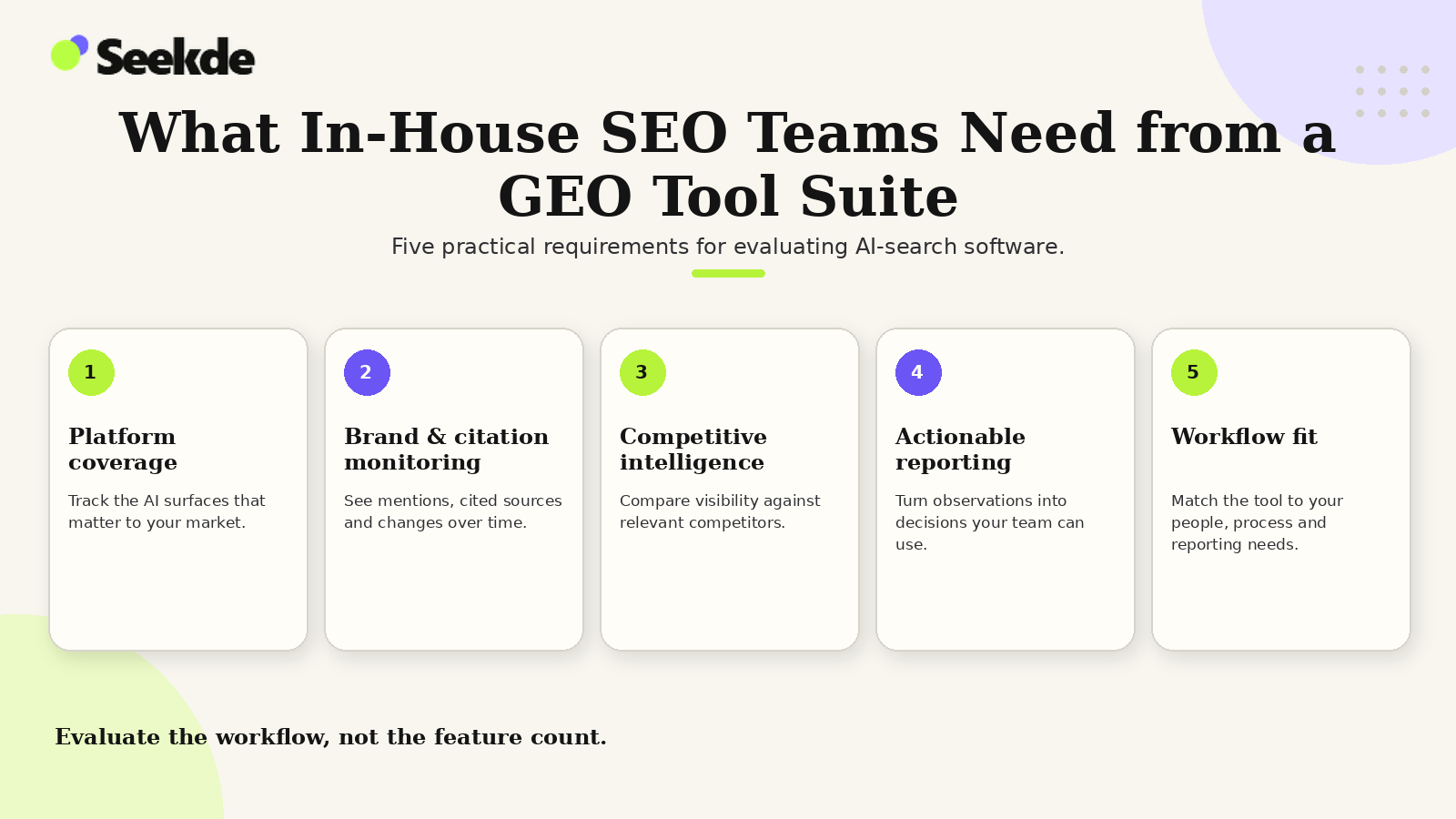
In-house SEO teams operate under unique organizational constraints: limited team headcount, cross-functional collaboration requirements with product and legal teams, and strict return-on-investment (ROI) scrutiny from executive leadership.
To satisfy in-house operational demands, a GEO tool must deliver four specialized capabilities:
Content Gap Diagnosis
- (Passage Extraction)
Workflow & Stack
- Integration
Longitudinal Trend &
- Executive Attribution
- Passage-Level Content Gap Diagnosis: The platform must not simply report whether your domain was cited; it must reveal why a competitor was cited instead. Identifying the exact textual propositions, statistics, or comparisons cited by the AI allows in-house writers to retrofit existing content.
- Workflow & Stack Integration: The tool must integrate with existing SEO stacks (e.g., Semrush, Ahrefs, Google Search Console, Looker Studio) to prevent data silos.
- Longitudinal Trend Tracking: Because generative outputs fluctuate based on temperature and live web index changes (as detailed in our guide on why AI visibility rankings change between runs), tools must average prompt responses across rolling 30-day windows.
- Executive Attribution Reporting: In-house leaders must translate AI search presence into business metrics: prompt-level Share of Voice, estimated citation impressions, and referral sessions.
Comparative Matrix: GEO Tools Evaluated for In-House Teams
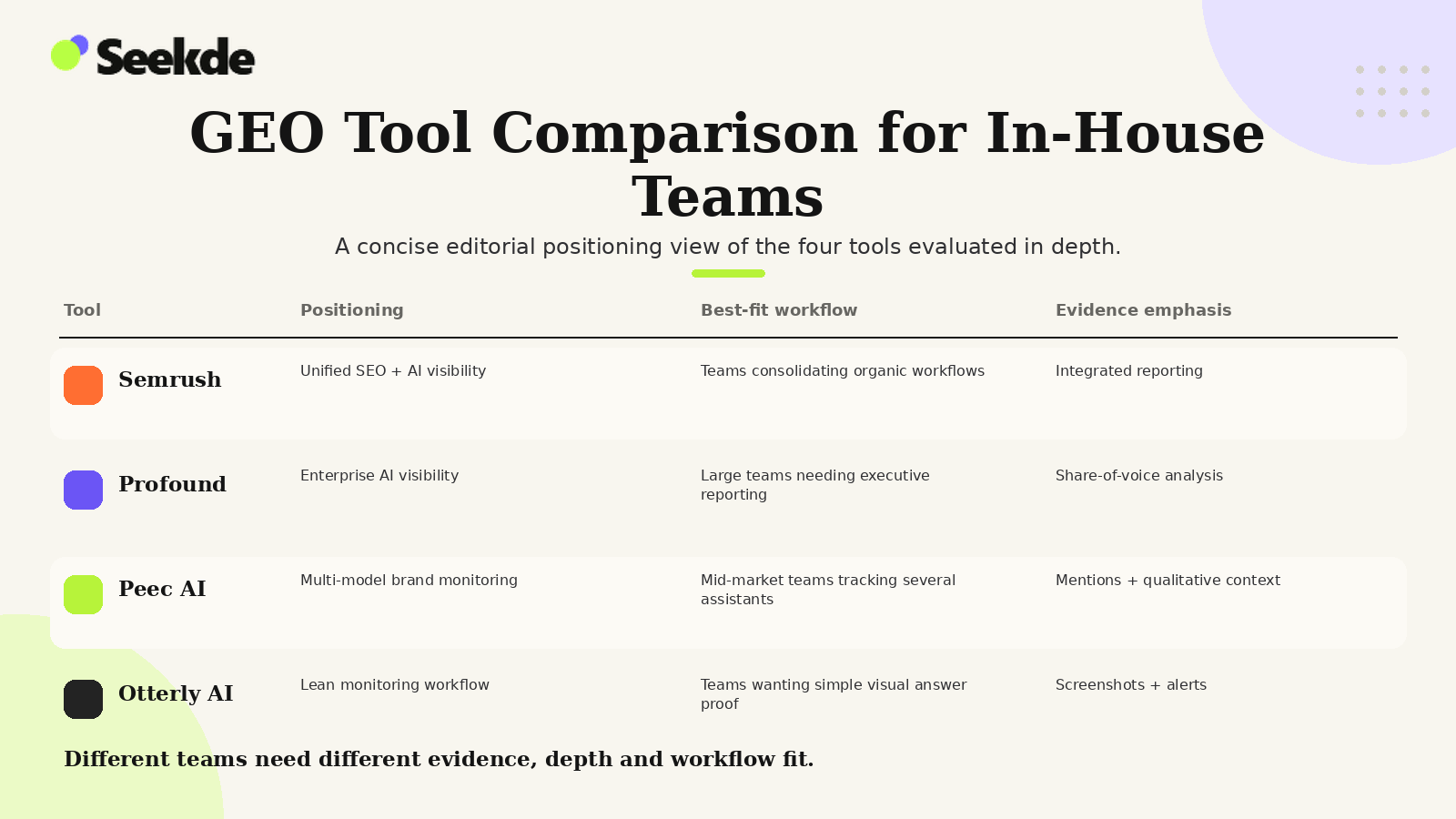
The following matrix compares the leading commercial platforms across key in-house operational criteria as of September 2026:
| Platform | Primary In-House Strength | Supported Engines | Content Gap Features | Pricing Model (September 2026) | Best In-House Fit |
|---|---|---|---|---|---|
| Semrush AI Toolkit | Unified SEO Workflow & AI Site Audit | Google AI Overviews, Select LLMs | High (Keyword-level SERP feature analysis & crawler blockers) | Core Semrush ($139.95–$499.95/mo) + Toolkit | In-house teams already deeply invested in the Semrush software ecosystem. |
| Profound | Enterprise SoV Modeling | Google AIO, ChatGPT, Perplexity, Copilot | Exceptional (Conversational prompt tree modeling & volume data) | Custom Enterprise ($1,500–$3,500+/mo annual) | Large enterprise brands requiring executive governance and prompt volume modeling. |
| Peec AI | Brand Mention & Sentiment Tracking | ChatGPT, Perplexity, Claude, Gemini | Moderate (Comparative mention tracking & sentiment polarity) | Self-Serve (~$80–$245/mo) | Mid-market tech and SaaS teams tracking multi-model brand presence. |
| Otterly AI | Visual Screenshot Proof | Google AIO, ChatGPT, Perplexity | Moderate (Visual answer archives & displacement alerts) | Self-Serve (~$29–$189/mo) | Lean in-house teams needing streamlined setup and visual proof-of-performance. |
| Seekde | RAG Extraction Mechanics | Multi-Engine Architecture | High (Crawler telemetry & extraction auditing) | Tiered Beta / Free Preview | Technical SEOs optimizing passage architecture and crawler access policies. |
In-Depth Tool Evaluations for In-House Teams
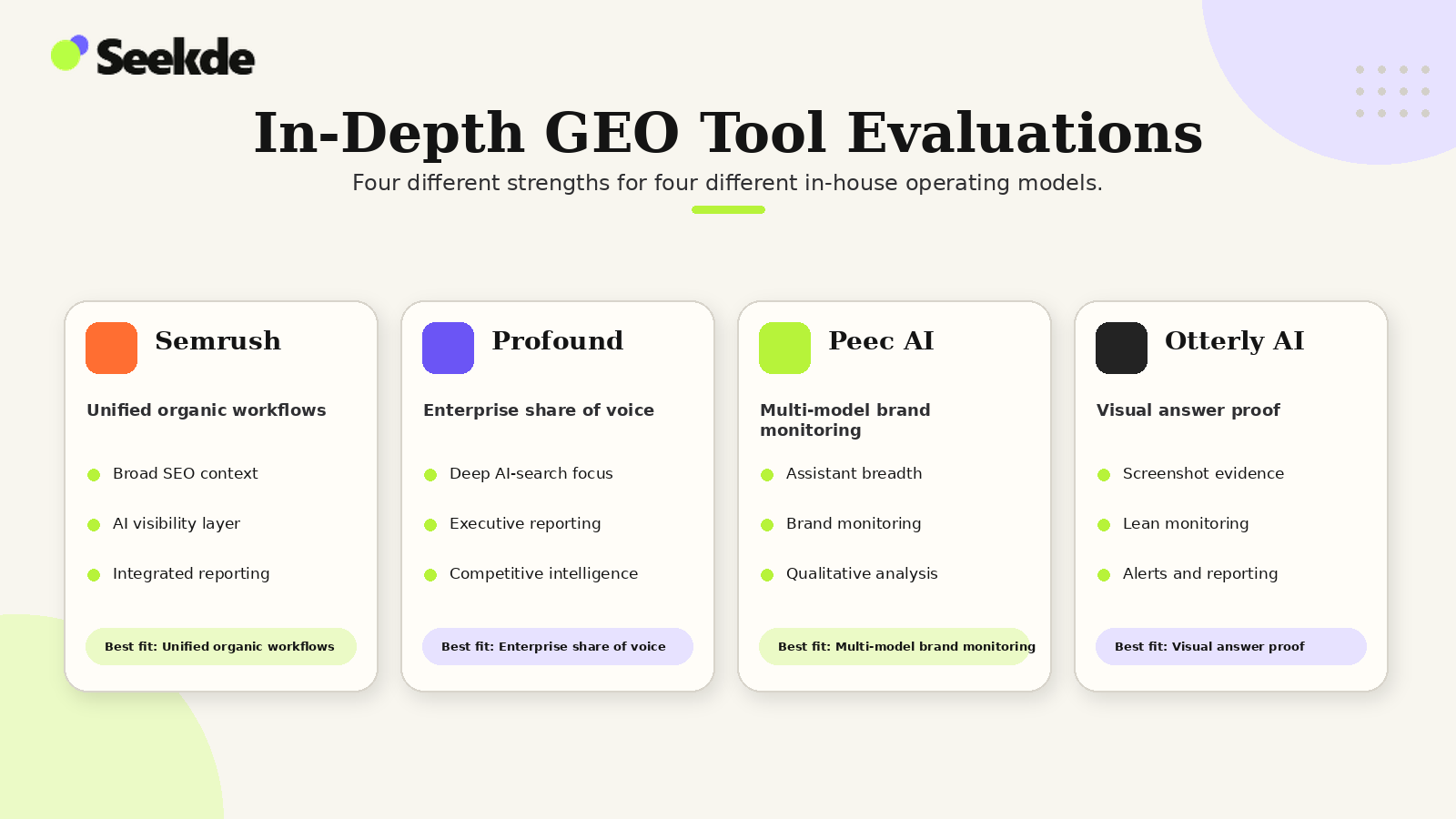
1. Semrush AI Visibility Toolkit: Best for Unified Organic Workflow
Why In-House Teams Choose It: For organizations with established SEO programs, introducing another standalone tool often creates administrative friction. The Semrush AI Visibility Toolkit allows in-house teams to track Google AI Overviews directly within their existing rank tracking campaigns.
- In-House Strengths:
- Correlates traditional organic position rankings with AI Overview presence for identical keywords.
- Automatically flags queries where an AI Overview displaced the top organic result, helping teams prioritize content refreshes.
- Seamless integration with existing Google Looker Studio reports and corporate dashboards.
- In-House Limitations:
- Primary focus remains heavily anchored to Google’s ecosystem; conversational coverage for ChatGPT Search and Claude is less developed.
- Pricing: Available as an add-on module to Semrush Pro ($139.95/mo), Guru ($249.95/mo), or Business ($499.95/mo) subscriptions.
2. Profound: Best for Enterprise Share of Voice and Executive Reporting
Why In-House Teams Choose It: In large enterprise organizations, CMOs and VP-level leaders demand holistic market share metrics rather than isolated keyword ranks. Profound provides mathematically modeled Share of Voice across prompt families.
- In-House Strengths:
- Prompt Volume Modeling: Estimates relative query volume across conversational prompts, helping teams prioritize high-value user intents.
- Multi-Engine Tracking: Evaluates responses across Google AI Overviews, Perplexity, ChatGPT Search, and Copilot simultaneously.
- Competitive Displacement Analysis: Shows which competitors consistently capture citations across specific product categories.
- In-House Limitations:
- High annual financial commitment; typically involves formal enterprise procurement cycles.
- Pricing: Custom enterprise contract pricing, typically beginning at $1,500 to $3,500+ per month depending on prompt volume and seat allocations.
3. Peec AI: Best for Multi-Model Brand Monitoring in Mid-Market SaaS
Why In-House Teams Choose It: Mid-market SaaS and ecommerce teams frequently find that their target buyers use Claude or Perplexity rather than standard Google search. Peec AI delivers clean multi-assistant visibility tracking with direct setup.
- In-House Strengths:
- Documented onboarding: In-house configuration specifications indicate setup for brand keywords, competitor sets, and prompt categories can be configured in approximately 30 minutes.
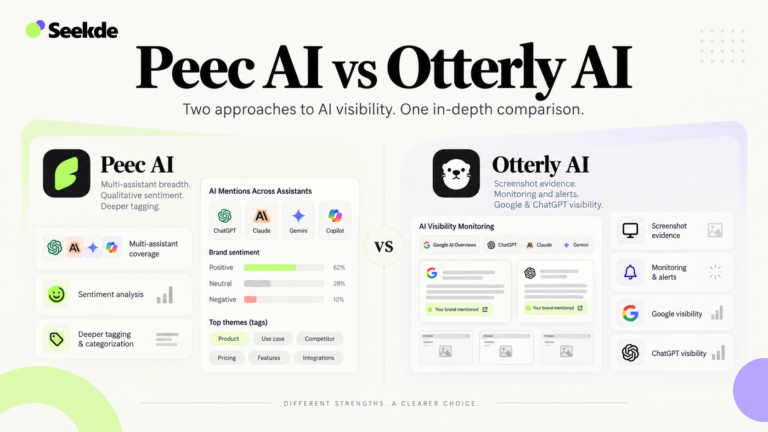
- Sentiment Scoring: Classifies whether conversational models recommend your product favorably, neutrally, or unfavorably.
- Automated Slack/Email Alerts: Notifies in-house teams immediately when a competitor replaces your brand in a key recommendation prompt.
- In-House Limitations:
- Does not provide deep crawl log intelligence or robots.txt simulation.
- Pricing: Transparent tiers starting around €89–€99 per month for entry-level monitoring, scaling to €199–€299 per month for broader prompt sets.
4. Otterly AI: Best for Lean Teams Seeking Visual Answer Proof
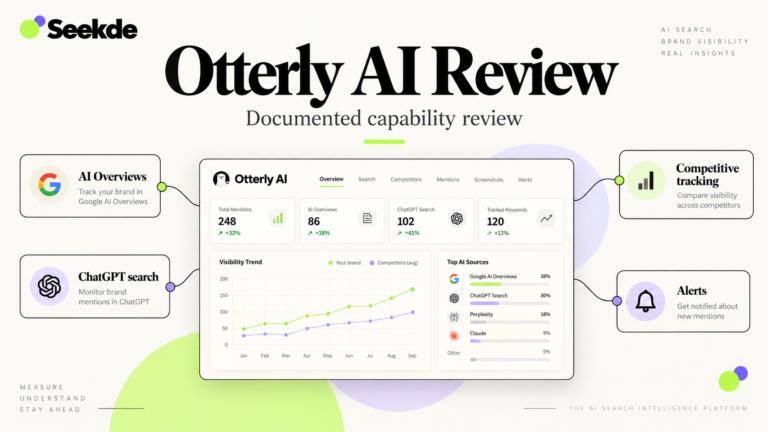
Why In-House Teams Choose It: When presenting generative search visibility to internal stakeholders (product managers, founders, executives), raw spreadsheets often fail to convey the reality of conversational search. Otterly AI captures full-page visual screenshots of rendered AI answers.
- In-House Strengths:
- Visual Screenshot Repository: In-house SEOs can show executives the exact layout of the AI answer card with hyperlinked citation badges highlighted.
- Highly Accessible Pricing: Low barrier to entry allows lean teams to run exploratory tests without complex procurement approvals.
- Google AIO and ChatGPT Monitoring: Covers the two largest traffic-driving conversational platforms.
- In-House Limitations:
- Lacks advanced API endpoints for custom data warehouse piping on lower tiers.
- Pricing: Entry tiers begin at $49 per month, with mid-tier plans at $99–$149 per month.
The In-House GEO Tool Selection Framework
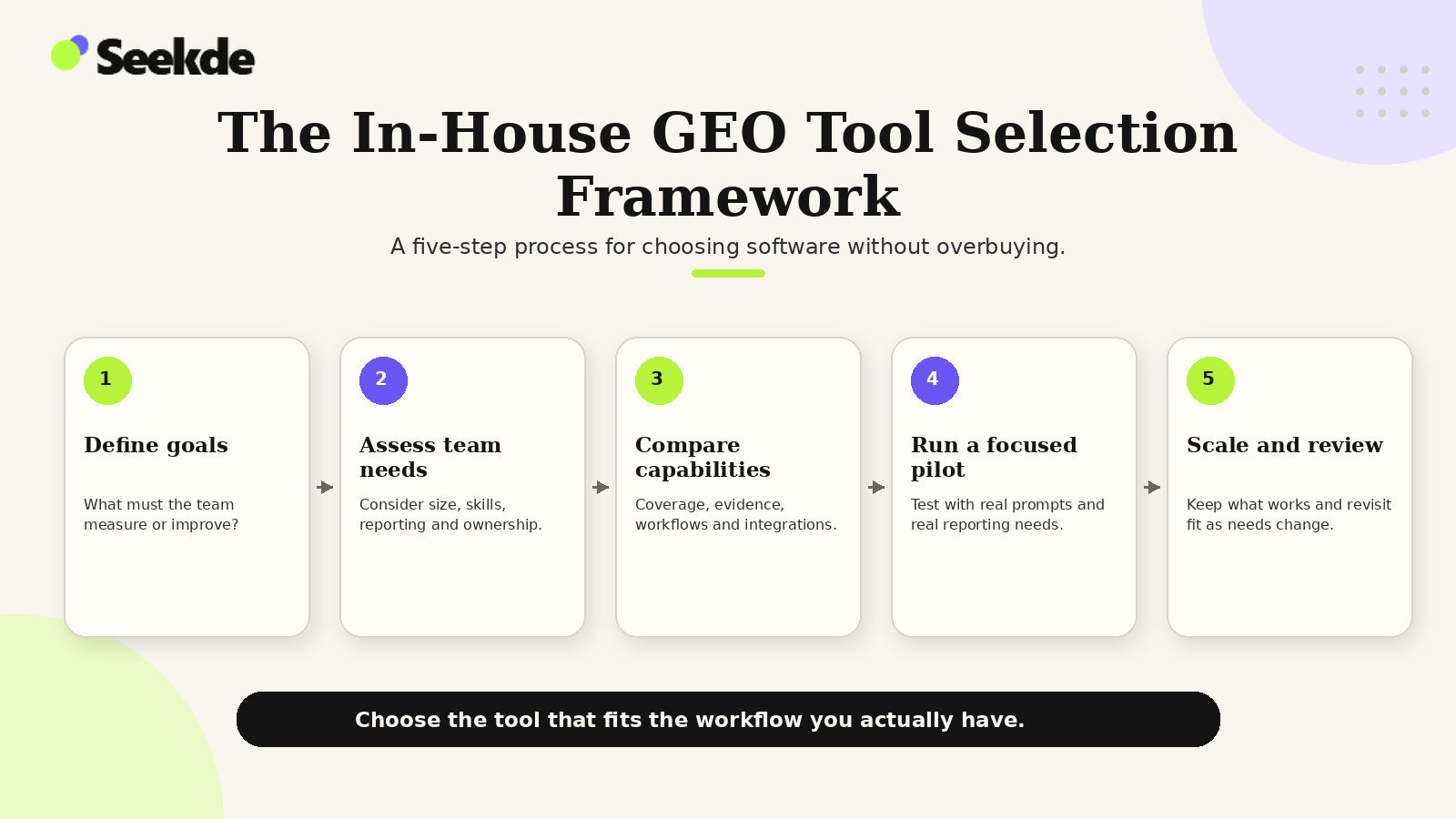
To select the right platform for your organization, follow this 4-step internal decision framework:
- Map Your Buyers’ Conversational Interfaces: Where do your target customers actually search? If your buyers are corporate developers using ChatGPT and Claude, a Google-only tracking tool is insufficient. If your buyers are consumer shoppers on standard Google SERPs, AI Overview tracking in Semrush is essential.
- Audit Stack Redundancy: Determine whether you need a dedicated standalone platform (Profound or Peec AI) or an integrated extension of your existing SEO software (Semrush).
- Define Your Executive Deliverable: If leadership expects a quarterly Share of Voice report for the board, choose a tool that models market share (Profound). If content writers need weekly alerts to refresh articles, choose a tool with granular prompt monitoring (Peec AI or Otterly AI).
- Run a Controlled Pilot: Test the platform with a standardized set of 25 core category prompts for 30 days before committing to multi-seat annual contracts.
Summary: Equipping In-House Teams for Generative Discovery
For in-house SEO teams, Generative Engine Optimization is not a replacement for traditional search marketing; it is a critical expansion of the search perimeter. As conversational answer engines capture increasing shares of user search queries, teams equipped with dedicated GEO monitoring tools gain a decisive competitive advantage.
By evaluating tools based on content gap intelligence, multi-engine coverage, and executive reporting capabilities, in-house search leaders can deploy the exact measurement infrastructure required to defend brand visibility and drive sustainable organic growth.
Related Guides and Reviews
- Best AI Search Visibility Tools: Complete Pillar Review
- Best AI Visibility Tools for Agencies
- Profound vs Peec AI: Platform Comparison
- Peec AI vs Otterly AI: Platform Comparison
- Otterly AI Review
- Semrush AI Visibility Toolkit Review
- Free Ways to Monitor AI Search Visibility
- What Is Generative Engine Optimization (GEO)?